














Choosing the right visa is one of the most important decisions when planning international travel or study abroad. Many travelers and aspiring international students confuse and compare student visas versus tourist visas, often assuming they are interchangeable. However, applying for the wrong visa can lead to rejection, deportation, or entry bans.
This comprehensive guide explains the differences between student visas and tourist visas, eligibility requirements, application processes, permitted activities, and how to choose the right one.
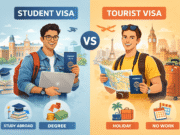
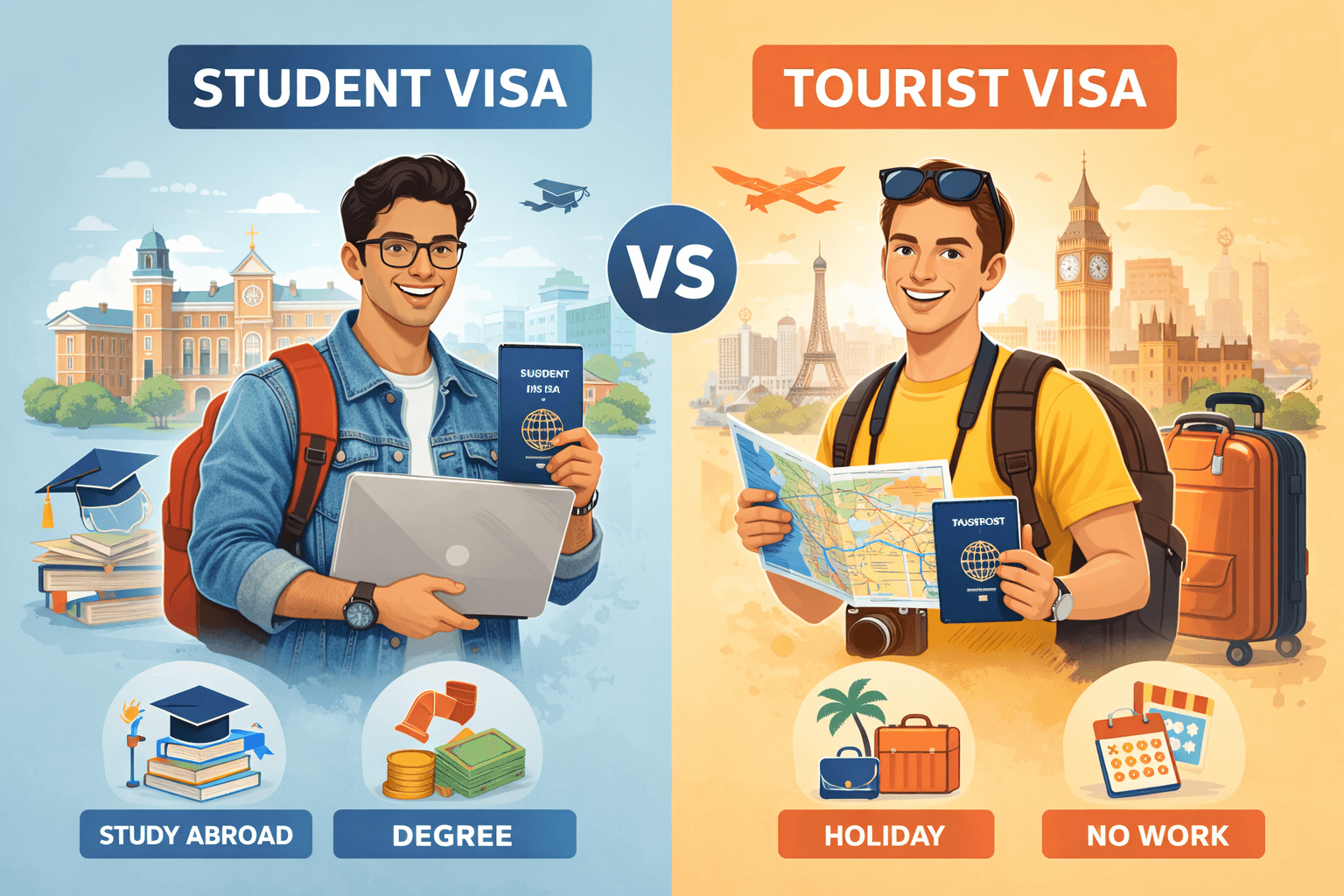
Student Visa vs Tourist Visa — What’s the Difference?
| Feature | Student Visa | Tourist Visa |
|---|---|---|
| Purpose | Education or academic program | Tourism or short visit |
| Duration | Long-term stay | Short-term stay |
| Work Rights | Limited work allowed in some countries | No work allowed |
| Financial Proof | Extensive | Basic |
| Application Complexity | High | Moderate |
What Is a Student Visa?
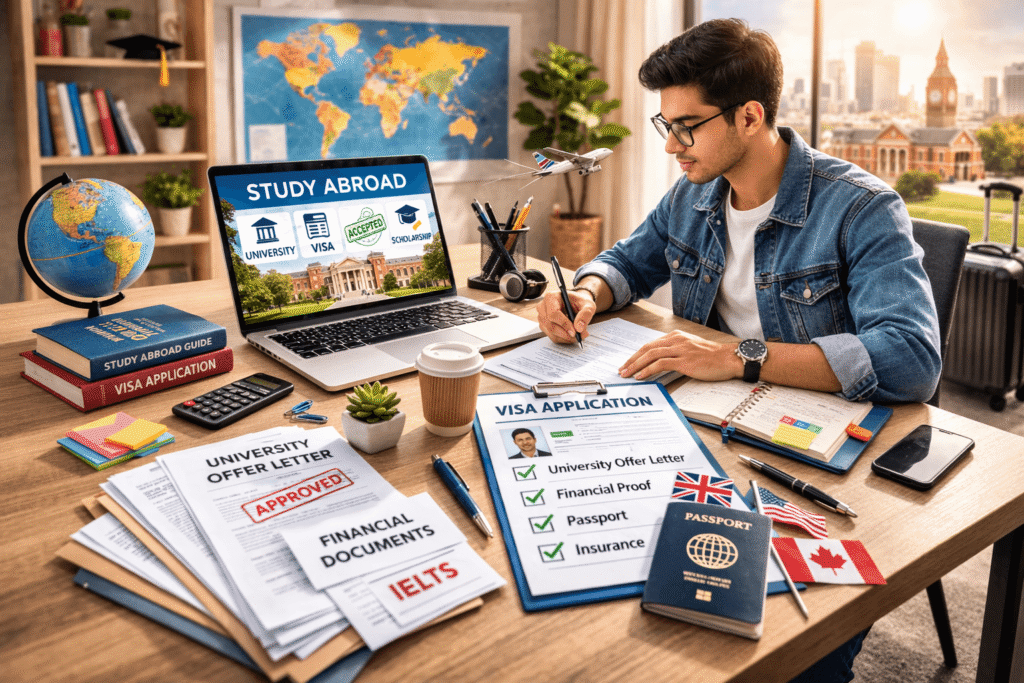
A student visa allows international students to live in a foreign country while pursuing academic education at a recognized institution. It is designed for university programs, language courses, exchange programs, and professional certifications.
Key Features of a Student Visa
- Requires admission from an approved school
- Long-term stay for course duration
- May allow part-time work
- May allow dependents
Who Should Apply for a Student Visa?
- Students pursuing a degree abroad
- Language program participants
- Exchange program students
- Long-term academic study applicants
Step-by-Step Student Visa Application Process
- Get admission from an accredited institution
- Receive enrollment documents
- Prepare financial proof
- Complete visa application
- Attend interview if required
- Wait for approval
What Is a Tourist Visa?

A tourist visa is a short-term visa that allows visitors to enter a country for leisure, sightseeing, or visiting family and friends. It does not permit full-time study or employment.
Key Features of a Tourist Visa
- Short stay duration
- Limited activities
- No work rights
- Less strict documentation
Step-by-Step Tourist Visa Application Process
- Complete visa application form
- Prepare travel documents
- Show proof of funds
- Attend interview if required
- Receive decision
Major Differences Between Student Visa Vs Tourist Visa
Purpose of Travel
Student visas are for education, while tourist visas are for leisure and temporary visits.
Duration of Stay
Student visas last months or years, while tourist visas typically allow 30–90 days.
Financial Requirements
Student visas require stronger financial proof due to tuition and living costs.
Work Permissions
Student visas may allow limited work. Tourist visas prohibit employment.
Can You Study on a Tourist Visa?
Most countries do not allow full-time study on a tourist visa. Only short courses or recreational programs may be permitted.
Can You Convert a Tourist Visa to a Student Visa?
Some countries allow conversion under specific conditions, while others require leaving the country and applying again.
Also Read: Best Countries To Study Abroad
Student Visa vs Tourist Visa — Which Visa Should You Choose?
Choose a Student Visa If You:
✔ Plan to study full-time
✔ Want a degree or certificate
✔ Need long-term stay
✔ Want part-time work options
✔ Plan academic career growth
Choose a Tourist Visa If You:
✔ Want a vacation
✔ Visit family
✔ Explore a country
✔ Stay short-term
✔ Attend events or conferences
Common Visa Application Mistakes
- Applying for tourist visa to study
- Weak financial proof
- Incomplete documentation
- Misrepresenting travel purpose
How to Increase Visa Approval Chances
- ✔ Provide strong financial proof
- ✔ Show clear travel or study intent
- ✔ Submit complete documentation
- ✔ Demonstrate ties to home country
- ✔ Follow embassy guidelines
Getting a visa approved is not just about submitting documents — it’s about convincing immigration officers that your application is genuine, financially secure, and compliant with immigration laws.
Visa officers evaluate:
- Your credibility
- Your financial ability
- Your travel purpose
- Your likelihood of returning home
- Your compliance with immigration rules
Below are the most effective strategies to significantly improve your approval chances.
a) Provide Strong Financial Proof
One of the biggest reasons visas are rejected worldwide is insufficient financial evidence. Immigration authorities want proof that you can support yourself without working illegally or becoming a public burden.
Strong financial proof demonstrates:
- Stability
- Responsibility
- Ability to fund your stay
- Lower immigration risk
What Counts as Strong Financial Proof
Different countries have different requirements, but common documents include:
1. Bank Statements (Most Important)
- Usually 6–12 months history
- Must show consistent transactions
- Should not contain sudden large deposits
- Should match your income level
Pro tip: Maintain steady account activity before applying.
2. Proof of Income
- Salary slips
- Employment letter
- Business registration
- Tax records
- Pension documents
This shows ongoing financial stability.
3. Sponsorship Documents (If Applicable)
If someone is funding your travel or education:
- Sponsor letter
- Sponsor bank statements
- Relationship proof
- Sponsor ID or passport
4. Scholarship or Funding Letter (For Students)
For student visas, official funding letters significantly increase approval chances.
Recommended Minimum Financial Coverage
Generally, you should demonstrate funds covering:
- Tuition (for students)
- Living expenses
- Accommodation
- Return travel
- Emergency funds
Always check country-specific requirements.
Common Financial Mistakes That Cause Rejection
❌ Submitting fake bank statements
❌ Large unexplained deposits
❌ Insufficient balance
❌ Inconsistent financial history
❌ Missing supporting documents
Financial transparency builds trust with visa officers.
b) Show Clear Travel or Study Intent
Immigration officers must clearly understand why you are visiting the country. Any confusion or inconsistency in your purpose can lead to rejection.
You must demonstrate that your intentions match your visa type.
How to Show Clear Intent for Tourist Visas
Provide:
- Detailed travel itinerary
- Hotel reservations
- Return flight booking
- Travel schedule
- Invitation letter (if visiting family)
Your plan should show temporary stay.
How to Show Clear Intent for Student Visas
Provide:
- Admission letter
- Statement of purpose (SOP)
- Academic goals explanation
- Career plans after study
- Course relevance to background
Your study plan should appear logical and genuine.
Write a Strong Statement of Purpose (For Students)
A compelling SOP should explain:
- Why you chose the country
- Why you selected the course
- Your future career plans
- Why you will return home
Avoid generic or copied statements.
Also Read: Travel insurance for international travel
Red Flags That Suggest Unclear Intent
- Contradictory information
- No clear travel plan
- Irrelevant course choice
- Weak explanation of study goals
Clear intent reduces immigration risk.
c) Submit Complete Documentation
Incomplete or incorrect documentation is a major cause of visa refusal. Even one missing document can delay or cancel your application.
Visa officers prefer organized, complete, and accurate applications.
Essential Documents Checklist
Although requirements vary, common documents include:
- Valid passport
- Visa application form
- Passport photographs
- Financial proof
- Travel itinerary
- Admission letter (students)
- Accommodation proof
- Medical certificate (if required)
- Police clearance (some countries)
How to Submit Documents Properly
✔ Follow embassy checklist exactly
✔ Arrange documents in required order
✔ Provide certified translations if needed
✔ Ensure names and dates match
✔ Double-check before submission
Organization Tips That Improve Approval Chances
- Use labeled folders
- Highlight key information
- Avoid messy paperwork
- Submit readable copies
- Keep document consistency
Professional presentation improves credibility.
d) Demonstrate Strong Ties to Your Home Country
Immigration officers must be confident that you will return to your home country after your visit. This is especially important for applicants from countries with high immigration risk concerns.
Strong home ties show you have reasons to return.
Examples of Strong Home Ties
1. Employment
- Job letter
- Leave approval letter
- Employment contract
- Business ownership proof
A stable job is one of the strongest ties.
2. Family Connections
- Marriage certificate
- Birth certificates of children
- Family responsibilities
3. Property Ownership
- Land ownership
- House documents
- Lease agreements
4. Education Commitments
- Ongoing studies
- Enrollment confirmation
5. Business Ownership
- Company registration
- Tax filings
- Business licenses
Why Home Ties Matter
Applicants with weak ties are considered at higher risk for overstaying. Strong ties significantly improve approval chances.
e) Follow Embassy Guidelines Strictly
Each country has unique visa rules, requirements, and procedures. Failure to follow official guidelines can lead to immediate rejection. Always rely on official embassy instructions — not social media advice.
What Following Guidelines Means
- ✔ Use correct visa category
- ✔ Complete forms accurately
- ✔ Pay correct fees
- ✔ Book appointments properly
- ✔ Follow interview rules
- ✔ Submit required biometrics
How to Find Official Requirements
Check:
- Embassy website- remember that each country has its own embassy website, for instance US embassy and consulate in Nigeria
- Immigration portals- this differs because each country has it’s own immigration portal to serve it’s citizens. An instance is The Nigerian Immigration Portal
- Visa application centers
- Official government announcements
- Avoid unofficial agents promising guaranteed approval.
Visa Interview Best Practices
If an interview is required:
- Answer honestly
- Be confident and clear
- Dress professionally
- Carry original documents
- Avoid memorized responses
Consistency between documents and answers is critical.
Common Guideline Violations
❌ Applying under wrong visa type
❌ Using outdated forms
❌ Missing appointment dates
❌ Providing false information
These mistakes often lead to bans.
To maximize your visa approval chances:
- Apply early
- Be truthful in all documents
- Maintain consistency across information
- Prepare thoroughly for interviews
- Avoid shortcuts or fake documents
A strong application tells a clear story:
You are financially stable, genuine in purpose, and compliant with immigration laws.
Conclusion — Student Visa vs Tourist Visa
The choice between a student visa and a tourist visa depends entirely on your purpose of travel.
- Student visa → long-term education and academic growth
- Tourist visa → short-term visits and travel experiences
Applying for the correct visa increases approval chances, protects your immigration record, and ensures a smooth international experience. If your goal is education, always choose a student visa. If your goal is travel or visiting, a tourist visa is the right option.
Also Read: Cheapest Countries To Study Abroad