






























Introduction
Studying abroad is a dream for many students, but the cost of international education often feels like the biggest obstacle. Tuition fees, accommodation, living expenses, and student visa proof of funds requirements can discourage even strong applicants from applying at all. That’s why so many international students search specifically for affordable countries to study in 2026.
The good news: several countries offer genuinely high-quality education at very affordable costs, making it possible to earn a globally recognized degree without taking on massive debt. At Every Moment Travels, this is one of the questions we field most from students trying to make studying abroad financially realistic.
This guide covers the cheapest countries to study abroad for international students, including tuition fees, monthly living costs, visa financial requirements, and practical budgeting considerations for 2026.
Why Choosing an Affordable Study Destination Matters
Studying in a lower-cost country doesn’t mean compromising on quality. Many affordable study destinations offer internationally recognized degrees, low or tuition-free public universities, flexible student visa policies, lower proof of funds requirements, and real part-time work opportunities for students.
For many international students, affordability also improves student visa approval chances, since embassies weigh your financial capacity carefully against your actual costs. Our full guide to proof of funds requirements covers exactly what embassies look for.
Germany: Tuition-Free Education in Europe
Germany consistently ranks among the most affordable countries to study abroad. Public universities charge little to no tuition, even for international students — typically €0 to €1,500 per semester, with living costs running roughly €850–€1,100 per month.
For your student visa, you’ll need to show approximately €11,208 per year, usually through a blocked account, a scholarship letter, or a formal sponsor. Our complete guide to studying in Canada offers a useful point of comparison if you’re weighing Germany against North American options.
Norway: Free Tuition With a High Standard of Living
Norway offers tuition-free education at public universities for both domestic and international students. Living costs run higher than Germany’s — roughly €1,100–€1,400 per month — but students get world-class education and quality of life in return.
For your visa, you’ll need to show approximately NOK 149,626 per year in available funds.
France: Low Tuition at World-Class Universities
France combines genuinely low tuition with real academic prestige. Public universities charge modest fees — typically €170–€650 per year — and students benefit from housing and transport subsidies that meaningfully reduce the cost of living, which otherwise runs €850–€1,800 per month depending on the city.
For your student visa, France requires you to show at least €615 per month in living expenses.
Poland: One of Europe’s Cheapest Study Destinations
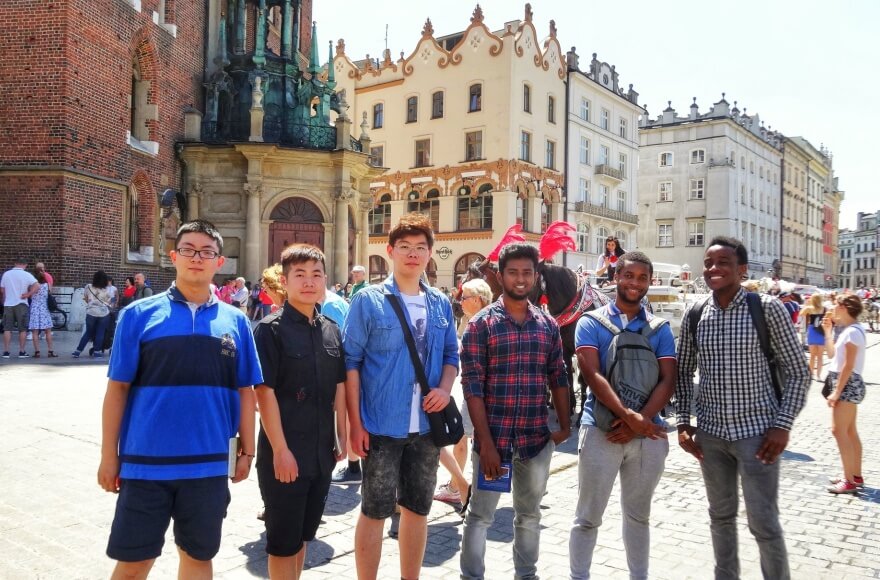
Poland has become a strong choice for students seeking affordable European education with genuine English-taught programs. Tuition generally runs €2,000–€4,000 per year, with living costs around €400–€700 per month — among the lowest in the EU.
For your visa, expect to show roughly $7,000–$8,000 for the academic year.
Mexico: Affordable Education in North America
Mexico offers low tuition, a vibrant student life, and comparatively flexible visa requirements. Tuition typically runs $1,000–$4,000 per year, with living costs around $500–$900 per month.
For your student visa, expect to show approximately $1,500–$2,000 per month in available funds.
India: One of the Most Budget-Friendly Study Destinations Globally
India remains one of the most affordable study destinations worldwide. Tuition ranges from $300 to $2,000 per year, with living costs around $300–$600 per month.
For your visa, expect to show roughly $10,000 for the year, or a formal sponsor letter covering that amount.
Comparison Table
| Country | Tuition | Living Cost | Proof of Funds |
|---|---|---|---|
| Germany | Free – €1,500/semester | €850–€1,100/month | €11,208/year |
| Norway | Free | €1,100–€1,400/month | NOK 149,626/year |
| France | €170–€650/year | €850–€1,800/month | €615/month |
| Poland | €2,000–€4,000/year | €400–€700/month | $7,000–$8,000/year |
| Mexico | $1,000–$4,000/year | $500–$900/month | $1,500–$2,000/month |
| India | $300–$2,000/year | $300–$600/month | ~$10,000/year |
Figures shift periodically with currency movement and policy updates — always confirm the current thresholds directly with the relevant embassy or university before you budget around them.
Final Thoughts
Studying abroad doesn’t have to be prohibitively expensive. By choosing the right country and preparing your student visa proof of funds correctly, you can earn a globally respected degree at a fraction of what many assume it costs.
Germany, France, Poland, Norway, Mexico, and India each prove, in their own way, that affordable education and genuine global exposure can go hand in hand. For the full application process once you’ve chosen a destination, our complete student visa application guide walks through what comes next.