


































Introduction: The High Stakes of Studying Abroad Without a Safety Net
For most international students, the dream of studying abroad meets a harsher reality somewhere around the fine print. You’ve secured your visa, paid tuition, and packed your bags — but what happens if a sudden bout of appendicitis results in a hospital bill running into the tens of thousands of dollars? Or if your laptop, holding a semester’s worth of research, is stolen on a train in Europe?
The real problem isn’t just health risk — it’s financial and legal risk. Most domestic health insurance doesn’t cross borders, and many universities and embassies (especially for J-1 and Schengen visas) won’t let you enroll, or in some cases enter the country, without proof of specific coverage.
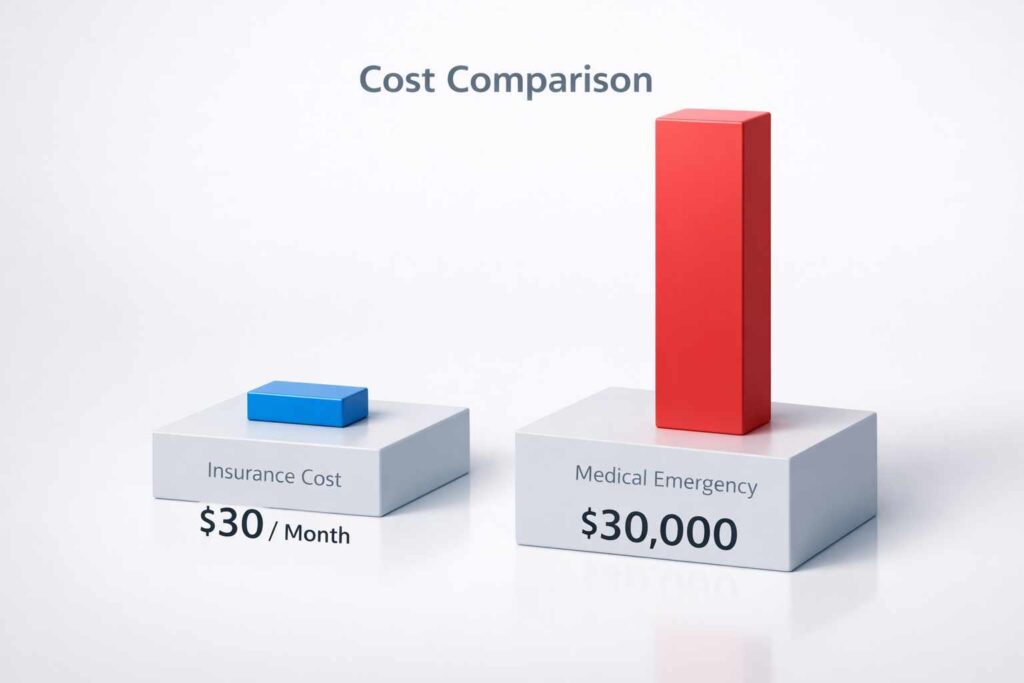
Uninsured medical costs for international students can be steep: a minor ER visit in the US commonly runs $1,500–$3,000, and an appendectomy can cost anywhere from $7,000 to over $50,000 depending on the hospital. This guide walks through how to choose a plan that actually protects you — without overpaying for coverage you don’t need.
Choosing the Right Plan, Step by Step

Finding the “best” travel insurance isn’t about picking the cheapest option — it’s about matching a policy to your destination and visa type.
Step 1: Identify your visa and university requirements
Check your “Evidence of Insurance” requirements before you shop:
- USA (J-1/J-2): must meet US Department of State minimums — $100,000 medical, $50,000 evacuation, $25,000 repatriation of remains, and a deductible no higher than $500 per accident or illness.
- Schengen Area (Europe): minimum €30,000 coverage with no deductible, required for visa approval. See our guide to travel insurance for Europe for more.
- Australia: Overseas Student Health Cover (OSHC) is required for the full duration of your visa.
Not sure which visa category applies to you? Our complete guide to student visas breaks down the different types.
Step 2: Evaluate the three coverage pillars that actually matter
Don’t get distracted by “lost luggage” perks — focus here first:
- Emergency medical — covers accidents and sudden illness.
- Medical evacuation — pays for transport home, or to a better-equipped facility, if local care isn’t sufficient.
- Repatriation of remains — a grim but standard requirement for nearly every student visa.
Step 3: Check for student-specific add-ons
Stronger student plans in 2026 tend to include:
- Mental health support — counseling for homesickness or academic stress.
- Study interruption coverage — reimburses tuition if you have to return home early for a family emergency.
- Sports coverage — protection if you join an intramural team.
Step 4: Compare private plans against your university’s plan
Universities often auto-enroll you in a “hard waiver” plan. These are convenient, but frequently 30–50% more expensive than private alternatives from providers like ISO, IMG, or Heymondo. If your private plan meets your school’s requirements, you can usually apply to waive the university plan and save a meaningful amount over an academic year.
2026 Compliance Checklist
Before you buy, check your policy against this list:
- [ ] Minimum medical limit — at least $100,000 per injury or illness.
- [ ] Deductible cap — should not exceed $500 for US J-1 visa compliance.
- [ ] Insurer rating — an A.M. Best rating of A– or higher is a good baseline for financial stability.
- [ ] Repatriation — minimum $25,000 coverage.
- [ ] Emergency evacuation — minimum $50,000 coverage.
- [ ] Pre-existing conditions — check the waiting period, typically 6–12 months.
- [ ] Direct billing — does the insurer pay the hospital directly, or do you pay upfront and claim later?
Comparing Top Student Insurance Providers
| Provider | Best For | Medical Limit | Deductible | Key Advantage |
|---|---|---|---|---|
| Heymondo | All-around / premium | Up to $10,000,000 | $0 | App-based 24/7 medical chat with upfront payments |
| SafetyWing | Budget / nomads | $250,000 | $250 | Monthly subscription, affordable for younger students |
| IMG (Patriot) | US visa compliance | $50,000–$500,000 | $0–$2,500 | Built specifically to meet F-1/J-1 visa requirements |
| World Nomads | Adventure / sports | $100,000+ | Varies | Covers 200+ adventure activities, including skiing and hiking |
| ISO Insurance | Low-cost US study | Up to $1,000,000 | Low | Plans tailored to specific US universities |
Coverage limits and pricing change regularly — always confirm current numbers directly with the provider before purchasing.
Ways to Save Money Without Losing Coverage
- Buy annual, not monthly, if you’re studying for a full degree. Annual policies are often meaningfully cheaper than renewing month to month.
- Consider a higher deductible if you’re generally healthy. A higher deductible can lower your premium noticeably — just make sure you actually have that amount set aside in case you need it.
- Use your school’s health center even with private insurance. Many campus clinics offer $0 co-pays regardless of which insurer you’re with.
- Use telemedicine for minor issues. Most top-tier 2026 plans include free video calls with doctors — a much cheaper option than an ER visit for a cold or a rash.
Common Mistakes to Avoid
- Buying insurance after you’ve already left home. Most policies are invalid if purchased after departure — buy at least 48 hours before your flight.
- Assuming coverage is comprehensive by default. Standard plans typically exclude unattended baggage theft, high-risk extreme sports (unless added), and alcohol- or drug-related incidents.
- Assuming your credit card’s travel coverage is enough. Credit cards often provide “travel accident” or trip interruption coverage, but rarely the comprehensive medical coverage a student visa requires.
- Not checking the provider network in your host country. If your insurer doesn’t have an in-network provider nearby, you may end up paying thousands out of pocket and waiting months for reimbursement.
Frequently Asked Questions
Does student travel insurance cover COVID-19? Yes — most reputable providers now treat COVID-19 like any other respiratory illness, covering testing and treatment when medically necessary.
Can I go home for the holidays and stay covered? It depends on the policy’s home-country coverage clause. Many plans allow limited coverage (commonly 15–30 days) during a visit home, but some pause or cancel coverage the moment you cross your home border — check this before you book a flight home.
Is “Cancel For Any Reason” (CFAR) coverage worth it for students? Usually not. CFAR tends to be expensive relative to its benefit for students. Trip interruption coverage — which kicks in if a family emergency pulls you home mid-semester — is typically the better and cheaper fit.
Conclusion: Don’t Let an Accident Derail Your Education
Choosing student travel insurance isn’t just a box to check for your visa — it’s a real safeguard for your time abroad. A single uncovered medical emergency can be expensive enough to disrupt your studies and put real financial strain on your family.
Compare a couple of providers against your specific visa requirements, check the numbers in this checklist against whatever policy you’re considering, and buy early. It’s a small task next to everything else on your study-abroad checklist, but it’s the one that protects the rest of it.