
































Overpriced rooms, misleading photos, hidden fees, and a poor location you didn’t spot until check-in — at Every Moment Travels, this is the exact frustration we hear about constantly from travelers booking hotels for the first time. Travel should feel exciting, but the booking process itself often becomes the most stressful part of the trip.
Most travelers run into the same questions: which booking site is actually the best, when’s the right time to book, should you go direct or through a third-party platform, and how do you avoid getting hit with hidden charges at checkout? Without a clear process, it’s easy to end up paying more for a lower-quality stay than you’d get with a bit more preparation.
This guide walks through the full hotel booking process step by step, whether you’re traveling for vacation, business, study abroad, or a family holiday.
The Hotel Booking Process, Step by Step
Step 1: Define Your Travel Needs
Before you search for anything, get clear on your actual priorities. Are you traveling for business or leisure? Do you need to be close to the airport or the city center? What’s your realistic accommodation budget? Do you specifically need Wi-Fi, breakfast, or a pool included?
Answering these upfront narrows your search fast and saves you from comparing hotels that were never going to fit your trip in the first place.
For help on the flight side of your trip, our guide to cheaper flight tickets in Nigeria is worth reading alongside this one.
Step 2: Choose the Right Booking Platform
Several genuinely useful platforms exist, and each serves a different purpose. Booking.com offers the widest inventory and strong review data. Expedia works well if you’re bundling a hotel with a flight. Google Travel is best used as a comparison starting point, since it pulls prices from multiple sites at once rather than selling rooms directly. And checking the hotel’s own website is always worth doing too — many major chains offer a best-price guarantee if you find a lower rate elsewhere.
| Platform Type | Advantages | Disadvantages |
|---|---|---|
| Online travel agencies (Booking.com, Expedia) | Easy comparison, frequent discounts | Possible added service fees |
| Direct hotel websites | Loyalty rewards, potential upgrades | Limited ability to compare against other options |
| Travel aggregators (Google Travel, Skyscanner) | Compare multiple sites at once | May redirect you to a third-party site to actually book |
For a deeper comparison of the major platforms specifically, our guide to the best hotel booking websites goes further into each one.
Step 3: Compare Prices Carefully
Hotel prices shift constantly based on demand, season, and location. When comparing options, look at the total cost including taxes, the cancellation policy, what’s actually included (breakfast, for instance), and the hotel’s ratings and recent guest reviews. A room that looks cheaper at first glance can end up costing more once the extra charges are added at checkout.
Step 4: Evaluate the Location
Location matters more than almost any other factor. A hotel that’s far from where you actually need to be can quietly add real transportation costs and lost time to your trip. Look for proximity to public transportation, the attractions you actually plan to visit, business districts if relevant, or the airport if you have an early flight.
| Location Type | Best For | Potential Drawback |
|---|---|---|
| City center | Tourists and business travelers | Generally higher prices |
| Airport hotels | Transit travelers | Limited nearby attractions |
| Suburban hotels | Budget travelers | Extra transportation needed |
| Beachfront hotels | Vacation travelers | Premium pricing |
If you’re traveling internationally, make sure your documentation is in order too — our complete travel insurance guide covers what most trips require alongside your accommodation.
Step 5: Check Guest Reviews Properly
Hotel photos can be misleading — professionally shot to flatter the space. The best way to verify real quality is through guest reviews, specifically ones that mention cleanliness, staff behavior, actual room size, noise levels, and safety. Don’t rely on the overall star rating alone; read the most recent reviews from verified guests instead, since a property’s quality can shift over time.
Step 6: Review the Amenities That Actually Matter to You
Different hotels offer different facilities, and what matters depends entirely on your trip. Business travelers tend to prioritize reliable Wi-Fi and workspace, while families often care more about room size and recreational facilities. Common amenities worth checking include Wi-Fi, breakfast, an airport shuttle, a gym, a pool, and parking.
Step 7: Understand the Hotel’s Policies
Many travelers skip this step and end up with unexpected charges as a result. Always check the cancellation policy, the check-in and check-out times, refund conditions, any extra guest charges, and deposit requirements before you book. A flexible cancellation policy is genuinely valuable if there’s any chance your plans might shift.
Step 8: Confirm Your Reservation
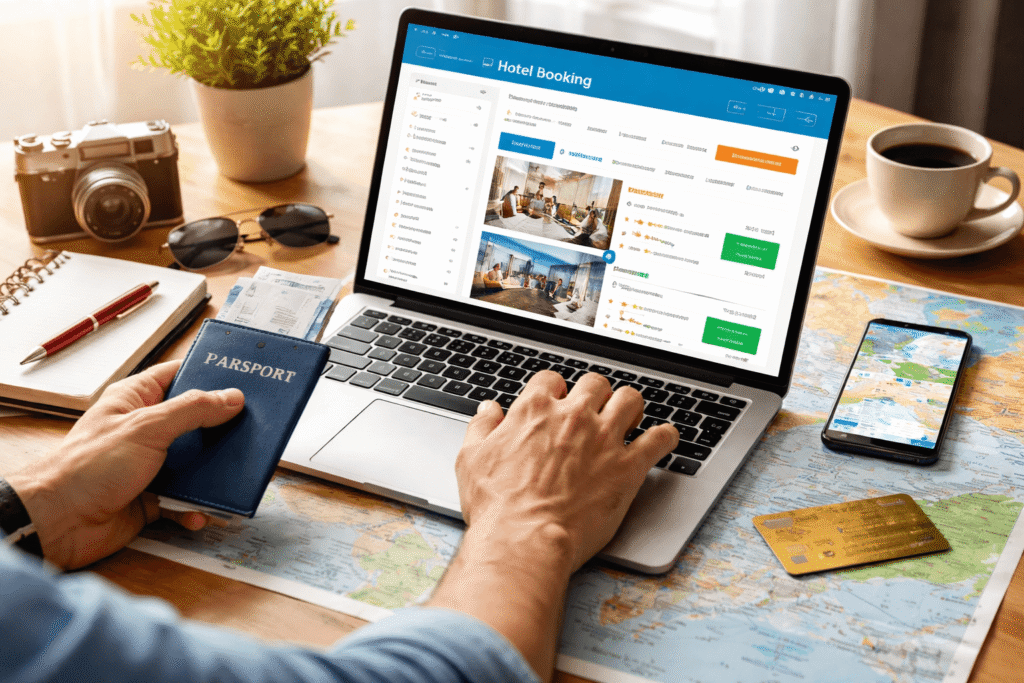
Once you’ve picked a hotel, complete the booking by entering your traveler information, selecting your room preferences, reviewing the final price carefully, confirming payment, and saving the confirmation. Keep a copy of your reservation confirmation email somewhere you can access it even without Wi-Fi.
For a step-by-step look at visa preparation alongside your accommodation planning, our guide to student visa applications is a useful companion read if you’re traveling to study.
Hotel Booking Checklist

Before you book, make sure you have your valid ID or passport, a credit or debit card for payment, your exact travel dates, complete guest details, and any special room requests ready to go. Having these prepared in advance makes the entire process faster.
Comparing Hotel Types
Different hotel categories suit different travelers and budgets.
| Hotel Type | Best For | Typical Price Range |
|---|---|---|
| Budget hotels | Backpackers, solo travelers | Low |
| Mid-range hotels | Families, vacation travelers | Moderate |
| Luxury hotels | High-end travelers | Expensive |
| Boutique hotels | Travelers wanting a unique experience | Moderate to high |
| Business hotels | Corporate travelers | Moderate |
Expert Tips for Finding the Best Deals
Book with real lead time. Hotel prices generally fluctuate with demand, and booking several weeks ahead tends to bring better rates than waiting until the last minute.
Travel during off-peak periods where you can. Beach destinations often run cheaper during the rainy season, and city hotels sometimes drop in price over weekends when business travel slows down.
Use price alerts. Several travel sites let you track a hotel’s price and notify you when it drops — a low-effort way to catch a genuinely good rate.
Consider a hotel loyalty program if you travel often. Frequent stays can earn you free upgrades, discounted rates, or free nights over time.
Common Hotel Booking Mistakes to Avoid
Ignoring hidden fees. Resort fees, parking fees, and cleaning fees can all show up at checkout — always confirm the final price, not just the advertised nightly rate, before you book.
Booking non-refundable rooms by default. They look cheaper upfront, but can cost you the entire amount if your plans change. Choose a flexible option whenever the price difference is small.
Not checking the location on an actual map. A cheaper hotel far from the city center can end up costing more once transportation is factored in.
Skipping the reviews. Guest feedback is often the only real warning sign for issues like noise, poor service, or a room that doesn’t match the listing photos.
Frequently Asked Questions
What’s the best day to book a hotel? Midweek bookings often come in slightly cheaper than weekend searches, though this varies by destination and season.
Is it cheaper to book hotels online? Generally yes — online platforms frequently run discounts and promotions that aren’t available at the front desk.
Should I book directly with the hotel? Booking direct can bring real benefits — loyalty rewards, free upgrades, and better customer support if something goes wrong. Comparison sites, on the other hand, generally give you better price visibility across options. Checking both before you commit is worth the extra few minutes.
How far in advance should I book a hotel? For international travel, one to three months ahead is a reasonable target. During peak seasons or major events, hotels can sell out well before that.
Are hotel photos reliable? They’re usually professionally shot, so they tend to flatter the space. Compare them against guest-uploaded photos in the reviews for a more realistic picture before you book.
Conclusion

Booking the right hotel makes a real difference to how a trip actually feels. With so many options available online, taking the time to compare prices, read recent reviews, and understand each hotel’s policies pays off directly in a smoother, less stressful trip.
The core steps are worth repeating: define your priorities clearly, compare real platforms rather than guessing, check reviews and amenities honestly, understand the cancellation policy, and avoid the common mistakes above. Get that right, and comfortable accommodation without overspending becomes a genuinely manageable goal — whether you’re traveling for vacation, business, or study abroad.