































Why Visa Processing Time Catches Travelers Off Guard
At Every Moment Travels, one of the most common panicked messages we get isn’t about a rejected visa — it’s about visa processing time. A client books flights for a wedding or a conference six weeks out, applies for their visa, and only then realizes the country’s standard processing window is longer than the time they have left before departure.
Processing time depends on a mix of factors: the country’s own immigration policies, the visa type (tourist, student, or work), how busy the embassy or visa center currently is, whether background checks are triggered, and simply how accurate and complete your documentation is. Get any of these wrong, and a routine application can stretch from weeks into months.
Before diving into timelines, it’s worth pointing out that delays aren’t always about processing speed — they’re often about avoidable mistakes on the application itself. If you want the fuller picture on that, our visa rejection reasons guide walks through the most common causes.
This guide compares processing times across major destinations and walks through how to build an application that doesn’t get stuck in review.
Step 1: Choose the Correct Visa Type
Before anything else, confirm you’re applying for the right category — choosing the wrong one is one of the most common (and most preventable) causes of delay or outright rejection.
| Visa Type | Purpose | Typical Processing Time |
|---|---|---|
| Tourist Visa | Travel and tourism | 5–30 days |
| Business Visa | Meetings, conferences | 5–20 days |
| Student Visa | Study abroad | 4–12 weeks |
| Work Visa | Employment abroad | 4–16 weeks |
| Transit Visa | Airport transit | 1–7 days |
Step 2: Prepare Your Documentation Properly
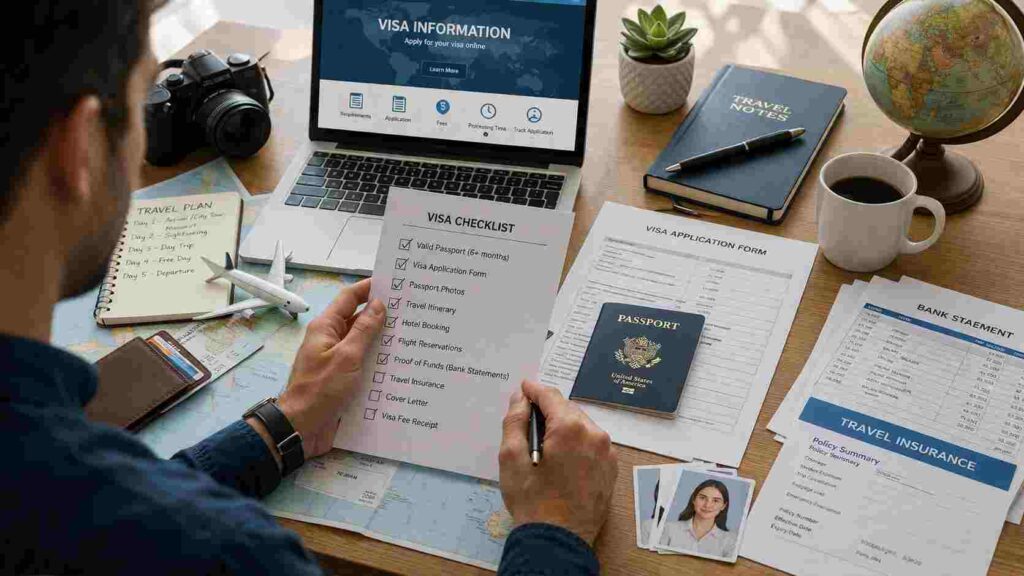
A well-prepared application is, by a wide margin, the single biggest lever you have over your own processing time. One document that’s frequently underestimated is a clear, well-structured travel itinerary — our guide to writing a travel itinerary for visa applications walks through how to present your plans clearly.
Standard checklist before you submit
- Valid passport (minimum 6 months validity beyond your stay)
- Completed visa application form
- Passport photos meeting the destination’s specifications
- A clear, professional travel itinerary
- Hotel booking confirmation
- Proof of funds (recent bank statements)
- Travel insurance, where required
- Visa fee payment receipt
- A cover letter explaining your purpose of travel
A strong, specific cover letter genuinely moves the needle on approval speed — see our guide to writing a compelling visa cover letter for the details.
Depending on the destination, you may also need an invitation letter, employment verification, proof of return travel, or biometric data.
Financial proof deserves particular attention — it’s one of the most common places we see applications from Nigerian travelers stumble, usually not because funds are insufficient but because the documentation doesn’t clearly show where the money came from or how long it’s been in the account. Our guide to proof of funds requirements breaks down exactly what embassies are looking for.
Step 3: Submit Through the Right Channel
Most visa applications go through one of three routes: directly through the embassy or consulate, through a third-party visa application center (common for Schengen countries and the UK), or fully online, which a growing number of countries now support.
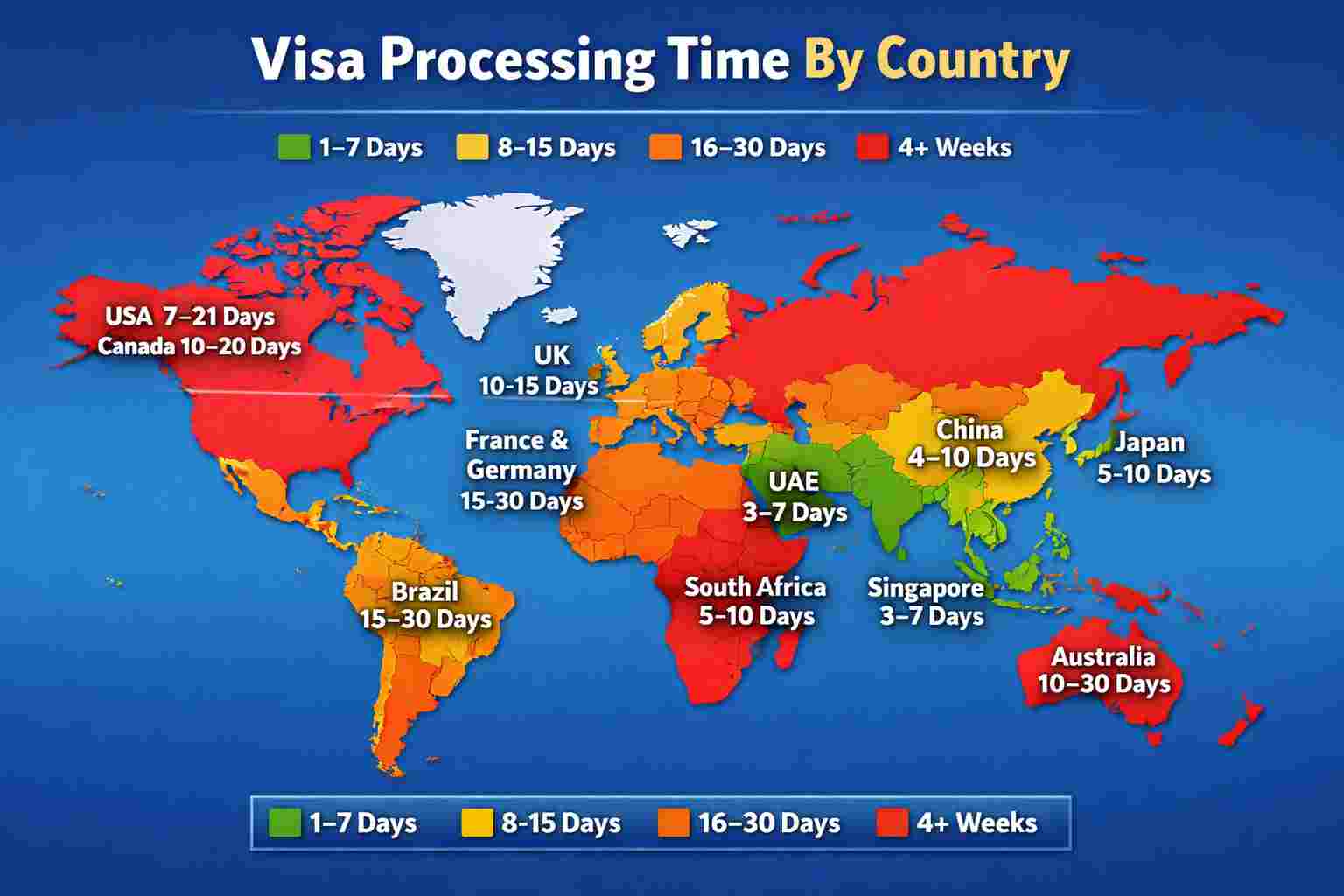
Global Visa Processing Time Comparison
| Country | Tourist Visa | Student Visa | Work Visa |
|---|---|---|---|
| USA | 7–21 days | 4–12 weeks | 2–4 months |
| UK | 10–15 days | 4–8 weeks | 3–8 weeks |
| Canada | 10–20 days | 6–12 weeks | 4–12 weeks |
| Australia | 10–30 days | 4–8 weeks | 4–12 weeks |
| Germany | 15–30 days | 6–12 weeks | 6–12 weeks |
| France | 15–30 days | 4–8 weeks | 4–10 weeks |
| Italy | 15–30 days | 4–8 weeks | 4–12 weeks |
| Spain | 15–30 days | 4–8 weeks | 4–10 weeks |
| Netherlands | 15–30 days | 4–8 weeks | — |
| Switzerland | 10–20 days | 6–12 weeks | — |
| Japan | 5–10 days | 2–4 weeks | — |
| South Korea | 7–15 days | 3–5 weeks | — |
| China | 4–10 days | — | — |
| India (eVisa) | 3–5 days | 4–6 weeks | — |
| UAE | 3–7 days | 2–4 weeks | 3–6 weeks |
| Singapore | 3–7 days | 2–4 weeks | 4–6 weeks |
| Thailand | 5–10 days | — | 3–6 weeks |
| Malaysia | 3–7 days | — | — |
| Turkey (eVisa) | 1–3 days | — | — |
| South Africa | 5–10 days | — | 4–8 weeks |
Timelines are typical ranges based on standard processing and can shift with embassy workload, seasonal demand, and individual application circumstances — always confirm current estimates on the relevant embassy or consulate’s official page before booking non-refundable travel.
Building a “Decision-Ready” Application
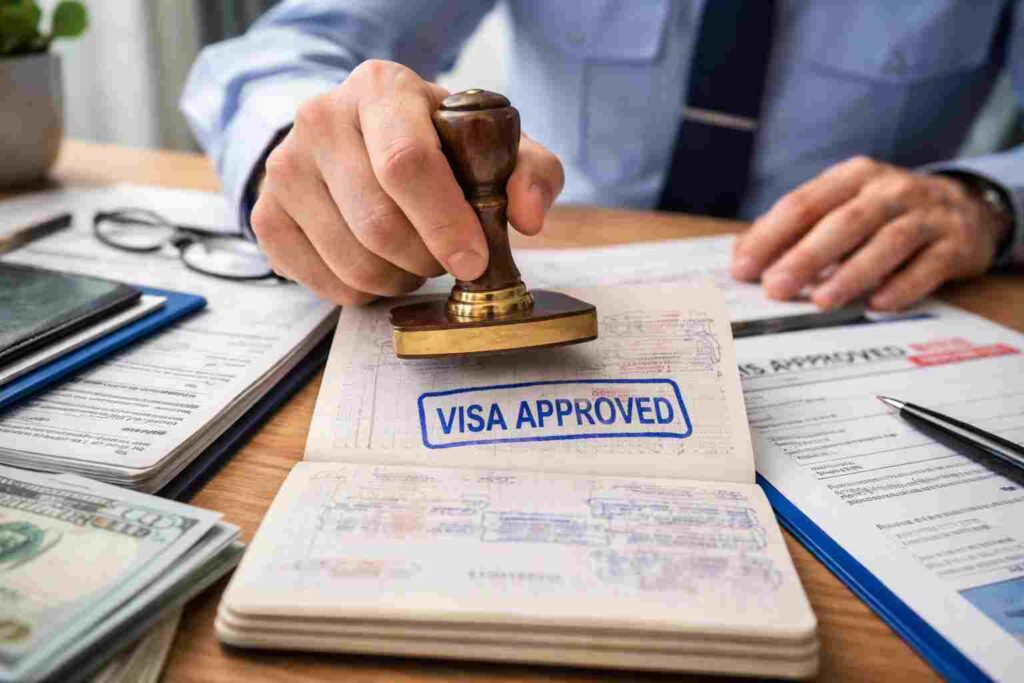
The fastest way through any visa process is submitting a file an officer can approve without needing to come back to you for anything. Every time a reviewer has to request a missing document, your file effectively goes to the back of the queue — so the goal is getting it right the first time.
Roughly six months out, double-check your passport validity — most countries require at least six months beyond your intended stay, and several, including the UK and Singapore, still require blank pages for physical visa stickers even where digital status is offered. This is also the point to confirm you’re applying under the correct visa sub-category; picking the wrong stream (a tourist category when you actually qualify as a different applicant type, for instance) is one of the most common causes of an immediate rejection.
Once you start your online application, try to complete and submit it in one sitting rather than leaving it as a long-dormant draft — some portals flag drafts left open across system updates for manual review, which can add unnecessary delay. Book your biometrics appointment as soon as your application is submitted; slots in busier application centers can fill up several weeks in advance during peak season.
While you wait, know that status changes like “In Progress” appearing more than once usually just reflects your file moving between processing stages, not a problem. As a general rule of thumb, it’s worth holding off on contacting the embassy until you’re clearly past the standard processing window listed for your visa type, rather than reaching out at the first sign of a status change.
Common Mistakes That Cause Delays
Inconsistent personal details. If your name is spelled differently across your passport, bank statements, and application form, expect it to trigger a manual review — align these documents before you submit.
Low-quality document scans. Many visa portals now use automated document readers, and a blurry or poorly cropped scan can bounce your file into a slower manual queue. Scan everything clearly, and check it before uploading.
Underestimating required funds. Currency fluctuations can leave you just under the minimum threshold by the time your application is reviewed. As a buffer, we generally advise clients to show meaningfully more than the stated minimum rather than cutting it close.
Frequently Asked Questions
How long does a tourist visa usually take? Most tourist visas process within 5–30 days, though the exact figure depends heavily on the destination and time of year.
Which countries tend to process visas fastest? Destinations with mature electronic visa systems — the UAE, Turkey, Singapore, and India, among others — typically offer some of the quickest turnaround times.
Why do visa applications get delayed? The most common reasons are additional security checks, high embassy workload during peak season, missing or inconsistent documentation, and requests for extra verification.
Can a visa processing time be guaranteed? No. Published timelines are estimates, not guarantees, and individual cases can move faster or slower depending on circumstances specific to your application.
Conclusion

Visa processing time varies widely by country and visa type, but the biggest factor within your control is preparation. Apply as early as you reasonably can, submit complete and consistent documentation, understand the specific requirements for your destination, and track your application status without panicking at every change.
If you’re applying for a Schengen visa specifically, our guide to the best travel insurance for Europe covers the coverage minimums you’ll need to include with your application.