






























Will studying abroad increase your chances of getting a good job and building a better life? This is a real fear for many students weighing the dream of studying abroad against the cost and risk of actually doing it.
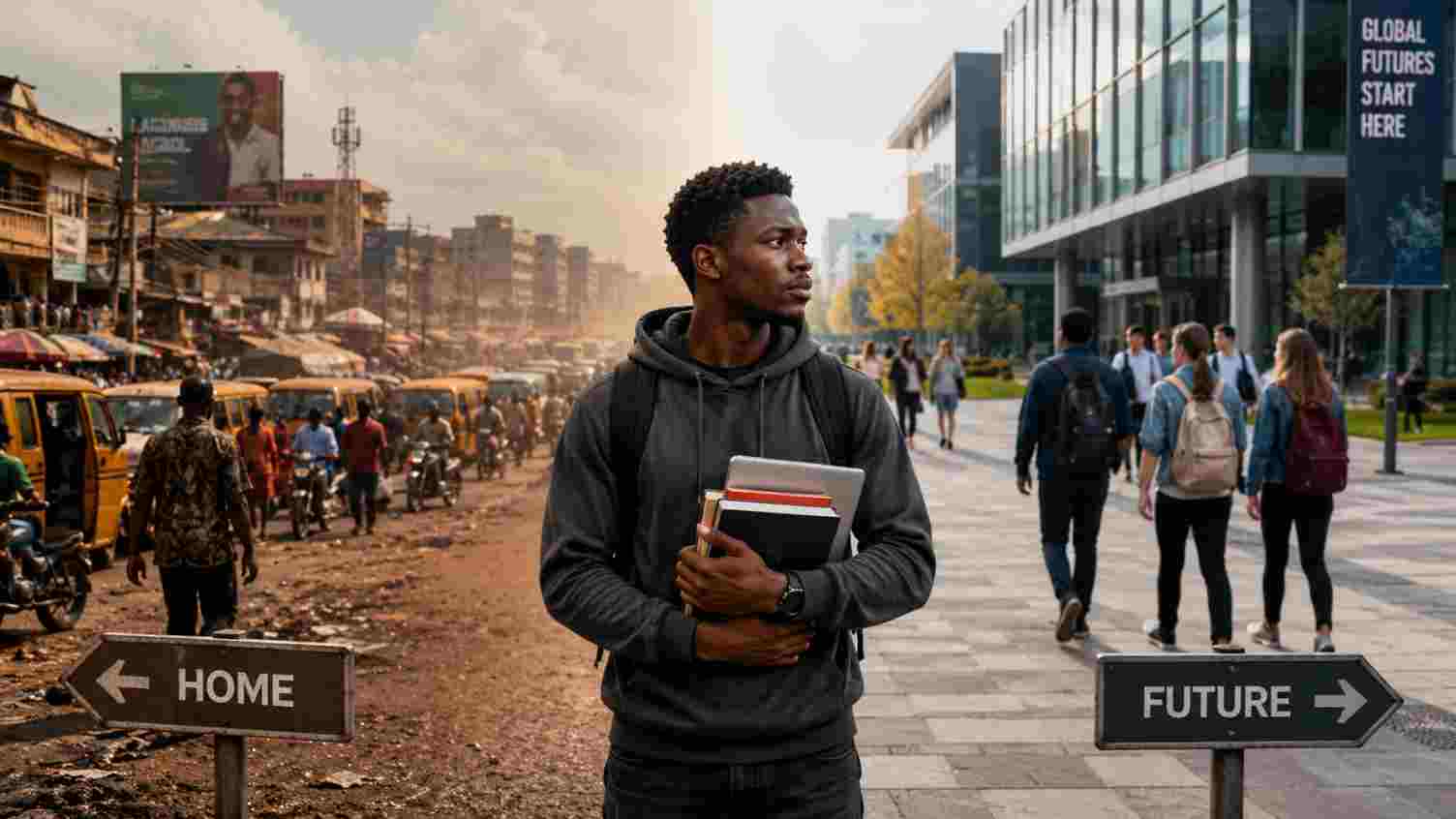
For many young people in Nigeria and across Africa, studying abroad is more than an educational dream — it’s often seen as an escape route from unstable systems, unemployment, insecurity, poor infrastructure, and limited career opportunities. Families sell land, empty savings accounts, and make enormous sacrifices just to give one child the chance to study in countries like Canada, Germany, Ireland, or Australia.
But the honest answer is yes — studying abroad can help you get a job. Just not automatically.
Studying abroad can genuinely increase your employability, expose you to global opportunities, and help you build a successful international career. But many students also struggle after graduation, largely because they misunderstand what studying abroad actually requires. This article isn’t based on internet theory — it draws on real observations and the lived experiences of African students who’ve studied overseas, gathered through our work at Every Moment Travels helping students navigate exactly this journey.
Why Studying Abroad Can Improve Your Career Opportunities
One major advantage of studying abroad is exposure to different educational standards. Many African students find that international education systems train students professionally, not just academically — the focus goes beyond passing exams into critical thinking, communication, problem-solving, teamwork, and working under real pressure. These are exactly the skills employers value worldwide.
Studying internationally exposes you to world-class teaching methods, advanced technologies, multicultural classrooms, global professional standards, and real networking opportunities — an exposure that naturally gives many graduates an edge in the global job market.
The Power of Global Exposure
Many students underestimate the value of multicultural exposure specifically. When you study abroad, you meet people from different countries, tribes, religions, and cultural backgrounds, and you learn to work professionally with people who think differently from you. That builds real adaptability and emotional intelligence — qualities companies increasingly value in a global economy.
A student who has genuinely adapted to life abroad often comes across as more globally prepared than someone who’s never had that experience.
A Real Example Worth Learning From
We know of a Nigerian student who traveled to the United Kingdom after secondary school to study computer science engineering. Today, she works with NASA. Would she likely have had access to that opportunity had she stayed in the Nigerian university system? Honestly, probably not — her international education exposed her to stronger professional networks, more robust academic systems, and a genuinely global career environment.
This doesn’t mean every student who studies abroad ends up at NASA. But it shows clearly how studying internationally can open doors that might never have opened otherwise.
The Biggest Myth About Studying Abroad

Many African students grow up believing a dangerous myth: “Once I travel abroad, my life is automatically settled.” That’s not true, and money doesn’t grow on trees overseas.
Many students are genuinely shocked to discover how expensive and demanding life abroad actually is. Salaries may be higher, but so are expenses — rent, electricity, transportation, food, insurance, internet, and every other daily bill. Some students arrive expecting immediate financial freedom and instead run into real financial pressure, stress, and survival jobs.
One practical way to reduce that pressure is securing the right travel insurance for students before you relocate — it won’t solve your budget, but it removes one genuine source of financial risk.
Studying abroad isn’t a magic ticket to success. It’s an opportunity, and opportunities still require real work.
A Foreign Degree Alone Doesn’t Guarantee Success
Another common misconception is that any international degree automatically guarantees a high-paying job. Unfortunately, that’s not always true — some students finish school abroad and still struggle to find work related to their course, and some eventually take unrelated jobs simply to survive.
Employers abroad look well beyond academics. In many international systems, employers care about far more than your GPA — they also evaluate communication skills, leadership experience, internships, volunteering, adaptability, teamwork, networking, cultural intelligence, and work ethic. This is genuinely an area where many African students struggle, since back home the message is often that academic excellence alone is enough. Internationally, employers tend to favor balanced candidates who can perform academically and function professionally in society.
The Mistake That Quietly Undermines Career Opportunities
One of the biggest mistakes international students make is treating their study period like an extended vacation — attending classes, passing exams, and otherwise isolating socially while ignoring professional development entirely. That’s a serious mistake.
Treat your years abroad as a pre-professional training period. Build relationships with professors, connect with mentors, take internships seriously, volunteer, join leadership activities, attend networking events, and gain real-world experience wherever you can.
Many jobs abroad are never publicly advertised — they’re filled through referrals and recommendations. Professors, mentors, alumni, and internship supervisors often recommend students they know personally. If nobody knows you, it becomes much harder for opportunities to find you.
Why Networking Matters More Than Most Students Realize
Networking is one of the most powerful career tools abroad, and many African students underestimate it because they come from educational systems where grades are treated as the main measure of success. Internationally, relationships matter just as much.
A lecturer who notices your consistency may recommend you for a research position. A classmate may refer you to a company internship. A volunteer supervisor may connect you to full-time employment. Networking isn’t about manipulation — it’s about visibility, professionalism, trust, and genuine relationships. Students who isolate themselves often struggle later precisely because they have no professional community around them.
Courses That Offer Better Job Opportunities
Course selection matters more than many students realize. Some choose programs that are already oversaturated or increasingly less relevant in the modern economy. If employability is your goal, future-focused fields generally offer stronger opportunities — software engineering, artificial intelligence, cybersecurity, data science, cloud computing, engineering, healthcare, and other technology-related disciplines.
AI is reshaping industries worldwide, and even traditional professions are increasingly integrating digital tools and systems. Students who position themselves in future-oriented fields tend to improve their odds of employment after graduation.
Best Countries for International Students Seeking Jobs
Germany remains one of the strongest options for many African students, thanks to affordable education, low tuition costs, a strong engineering and tech sector, and real post-study work opportunities. For students from less privileged backgrounds, Germany’s affordability can make international education genuinely realistic.
Ireland is increasingly popular for tech-focused students — major companies like Google have significant operations there, and Ireland’s post-study work options give graduates real time to build professional experience. If you’re weighing destinations, our comparison of the UK and Canada for international students is worth reading alongside this.
Canada is widely known for welcoming international students, with post-graduation work permit pathways that make it easier for graduates to gain real work experience and eventually pursue permanent residency. Our complete guide to studying in Canada covers the current student route in detail.
Australia offers globally respected universities and strong opportunities in engineering, computer science, healthcare, and technology, backed by structured post-study work pathways. If you’re still deciding, our guide to the best countries for international students in 2026 is a useful next read.
The Emotional Reality Nobody Talks About Enough
Most study-abroad content online focuses on visas, scholarships, and salaries. Very few discuss the emotional realities.
Homesickness and loneliness are real. Many African students suddenly find themselves in environments where they’re one of very few Black students, and that isolation can become genuinely overwhelming — missing family, friends, food, language, and cultural familiarity.
Family pressure builds too. Some families sacrifice everything to sponsor one child abroad — land sold, savings gone, relatives contributing financially — and students often carry real emotional weight from feeling they simply cannot fail. Some parents even begin asking students for money while those same students are still struggling to survive on their own. That pressure can become genuinely exhausting.
Culture shock is harder than most people expect. Students have to adapt to different social systems, communication styles, classroom expectations, and lifestyles, and some struggle with identity conflicts as they navigate wanting acceptance in an unfamiliar environment.
Discrimination still exists in many parts of the world. Some students encounter discriminatory comments, social exclusion, unequal treatment, or subtler forms of prejudice — experiences that can genuinely affect emotional well-being and self-confidence.
The Students Most Likely to Succeed Abroad
From what we’ve observed, students who succeed internationally tend to share certain traits: they’re disciplined, punctual, adaptable, teachable, accountable, hardworking, and emotionally intelligent. Most importantly, they understand that success abroad requires more than intelligence alone — professionalism, character, and consistency all matter just as much.
One Final Truth Every Student Should Understand

If you genuinely want studying abroad to help you get a job, don’t focus only on academics. Live a balanced student life — build relationships, volunteer, take internships seriously, join leadership activities, communicate professionally, develop your LinkedIn profile, and connect with mentors and professors.
Because in many cases, opportunities come through people who know your character, your consistency, and your abilities. A degree may open the door, but relationships, professionalism, and adaptability across cultures are often what keep it open.
Final Verdict: Will Studying Abroad Actually Help You Get a Job?
Yes — studying abroad can significantly improve your chances of getting a job and building a successful international career. But success isn’t automatic, and it may not happen immediately.
A foreign degree without networking, communication skills, adaptability, leadership experience, and professional exposure can still lead to real frustration. Studying abroad isn’t simply about relocating to another country — it’s about transforming yourself into a globally competitive professional.
Students who understand this early tend to position themselves for long-term success. Those who don’t often discover, too late, that international education alone isn’t enough to get them a job abroad after graduation.