































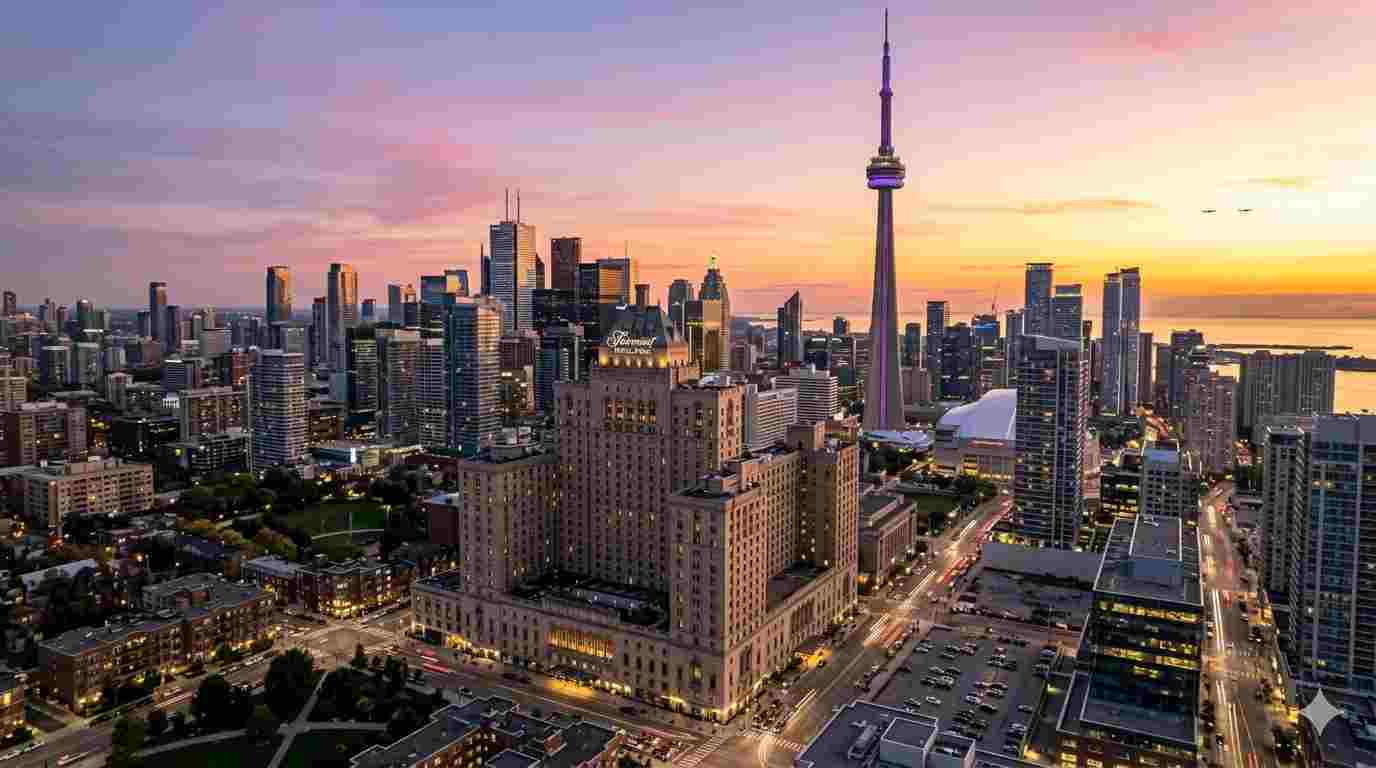
Toronto is no longer just Canada’s financial hub, it’s evolved into a genuine global cultural destination. The city welcomed close to 28 million visitors in 2025 alone, according to Destination Toronto, contributing billions to the local economy. With downtown hotel occupancy running high during peak seasons, finding the right place to stay isn’t just a luxury, it’s a real strategic decision.
Whether you’re here to scale the CN Tower, explore the historic Distillery District, or catch a show in the Entertainment District, your choice of hotel shapes the entire trip. This guide breaks down the top-rated stays, neighborhood differences, and money-saving strategies worth knowing before you book.
The “Toronto Paradox” of Choice
For many tourists, booking a hotel in Toronto runs into what locals sometimes call the “Toronto Paradox.” The city is geographically massive (the Greater Toronto Area covers over 7,000 square kilometers) yet the most iconic attractions sit packed into a dense, high-traffic core.
The most common issues we see: booking a “cheap” hotel out in Mississauga or Etobicoke, only to realize a 90-minute commute eats into every day of the trip. Unexpected fees, a Destination Marketing Program charge on top of Ontario’s 13% HST, can quietly add hundreds to a final bill. Staying in a quiet, residential area like the Annex when what you actually wanted was the nightlife of King Street West. And paying luxury prices for a “legacy” hotel that hasn’t seen a real renovation in decades.
The Toronto hotel market has also gotten more competitive recently, with newer entrants like Nobu and Ace Hotel pushing established properties to reinvent themselves. This guide is meant to help you navigate that landscape with a clearer sense of what fits your trip.
How to Choose Your Ideal Stay, Step by Step
Step 1: Identify Your “Anchor” Attraction
Decide what you actually want to see most. For sports and big shows, the Blue Jays at Rogers Centre. For a concert at Scotiabank Arena, stay in the Entertainment District. But, for high-end shopping and museums like the ROM, Yorkville fits better. For history and quieter walks, the Distillery District or the St. Lawrence Market area is a strong choice.
Step 2: Use the Subway Line to Your Advantage
Toronto’s subway system is the city’s backbone. Aim for a hotel within a 5–10 minute walk of a Line 1 (Yonge-University) station — its U-shape gives you both north-south and east-west access to nearly every major landmark without needing a car.
Step 3: Compare Value-Added Amenities
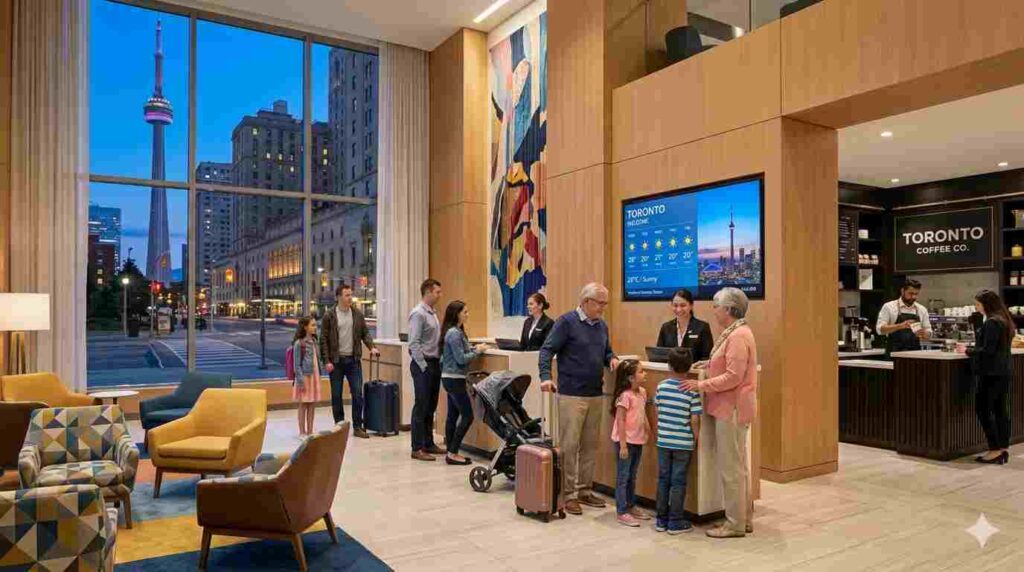
Many Toronto hotels have shifted toward genuinely useful lifestyle amenities worth weighing. PATH access (a direct underground walkway connection) matters a lot during winter visits or a rainy spring day. EV charging is now close to standard in 4-star-plus properties. Complimentary bike rentals are a real perk if you want to explore the 46km Martin Goodman waterfront trail. And digital check-in can save you real time standing at the front desk after a long flight.
Step 4: Check the Renovation Status
Toronto’s hotel scene went through a significant refresh between 2023 and 2025. Before booking, check whether the listing photos actually reflect current interiors. This is because several older brands have recently completed major updates, and some listings still show outdated rooms.
Before you book, our guide to finding cheap international flights is worth a read to save on getting there in the first place.
Booking Checklist
Before you confirm, check that your hotel meets these criteria:
- [ ] Proximity to Union Station, especially if you’re arriving via the UP Express from Pearson Airport.
- [ ] Reliable WiFi speed — worth confirming if you’re working remotely during the trip.
- [ ] Individual room climate control — Toronto’s weather swings widely across seasons.
- [ ] A genuine 24-hour cancellation window, given how common flight delays into Pearson can be.
- [ ] Confirmation that HST and the Municipal Accommodation Tax are included in the quoted price — many booking sites hide these until the final payment page.
- [ ] A check on soundproofing, particularly for hotels on King Street or Queen Street, where the city’s streetcars run late into the night.
Top Hotels by Category
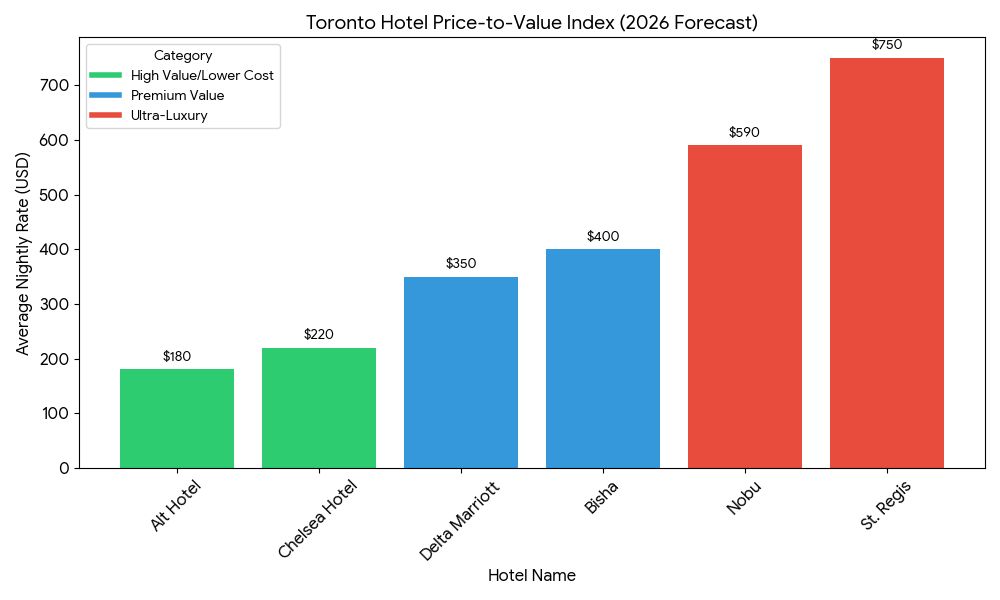
| Hotel Name | Neighborhood | Category | Avg. Price (USD) | Best For |
|---|---|---|---|---|
| Fairmont Royal York | Financial District | Iconic Luxury | $450–$600 | History and PATH access |
| The St. Regis Toronto | Downtown Core | Ultra-Luxury | $750+ | Skyline views and full-service amenities |
| Bisha Hotel | Entertainment District | Lifestyle/Boutique | $400–$550 | Nightlife and a rooftop pool |
| 1 Hotel Toronto | King West | Sustainable Luxury | $500–$650 | Eco-conscious travelers |
| The Drake Hotel | Queen West | Artsy/Boutique | $300–$450 | Creatives and a local, neighborhood feel |
| Chelsea Hotel | Yonge & Gerrard | Mid-Range/Family | $220–$350 | Families (there’s an on-site waterslide) |
| Alt Hotel Airport | Pearson (YYZ) | Budget-Friendly | $180–$250 | Layovers and early flights |
| Ace Hotel Toronto | Fashion District | Design-Forward | $380–$500 | Design and music enthusiasts |
| The Broadview Hotel | Riverside (East) | Boutique/Artsy | $280–$400 | Sunset views and the east-end scene |
Pricing varies by season and booking window — treat these as a general range to plan around, and confirm current rates before booking.
A Closer Look at Some Standout Properties
Fairmont Royal York, sitting directly across from Union Station, is Toronto’s grand historic hotel. Having over 1,300 rooms, with a real history of hosting royal visits. Its Gold Lounge underwent a major renovation in 2025, and the Library Bar’s “Bird Bath” martini has become something of a local institution.
Bisha Hotel leans design-forward, with each floor styled by a different artist, including one designed by Lenny Kravitz. Its rooftop restaurant, KOS, offers an infinity pool view that genuinely competes with anything else in North America.
Hotel X Toronto, located at Exhibition Place, feels more like a resort than a city hotel, with a large athletic center, a cinema, and unobstructed views of the Lake Ontario shoreline. This is a strong pick for families wanting more built-in activity.
Nobu Hotel Toronto, which opened in June 2025, has quickly become a go-to in the Entertainment District. It’s Canada’s first Nobu property, built as a private 36-room boutique experience across the top floors of a two-tower complex, leaning into a minimalist Japanese aesthetic. Even non-guests can book the Sakura Lounge’s thermal ritual experience, run in partnership with AIRE Ancient Baths. It is worth considering after a long flight even if you’re staying elsewhere.
Park Hyatt Toronto, following a multi-year renovation, has reclaimed its place as the go-to base in Yorkville for museum-goers and shoppers. Its rooftop bar, The Writers Room, has been a literary gathering spot for decades, and sits a two-minute walk from the Royal Ontario Museum and Bloor Street’s upscale shops.
Shangri-La Toronto, positioned where the Financial District meets the west end, distinguishes itself through its bathrooms. It has heated marble floors and floor-to-ceiling windows that actually open, a genuine rarity in a high-rise hotel. Its fifth-floor Miraj Hammam Spa is among the more distinctive wellness offerings in the city.
Expert Tips
Toronto rewards travelers who plan around transit rather than a rental car. If you’re staying downtown, skip the car entirely. This is because parking alone can run $50 a night, and traffic eats hours you’d rather spend exploring. The streetcar network and subway cover the core far more efficiently.
Book 8–12 weeks out. Prices tend to climb sharply in the final two weeks before arrival, so booking roughly three months ahead tends to land the best rate.
Consider shoulder season. May and September bring milder weather and noticeably lower hotel rates compared to the humid peak of July or the busy December holiday stretch.
Ask about production rates if you’re flexible. Toronto hosts a significant amount of film and TV production (“Hollywood North”), and hotels sometimes hold unlisted room blocks for crews. It doesn’t hurt to ask whether a corporate or production rate is available.
Target a Sunday night stay if your dates allow it. Sunday tends to be the cheapest night of the week, since business travelers arrive Monday and leisure travelers typically check out Sunday morning.
Common Mistakes to Avoid
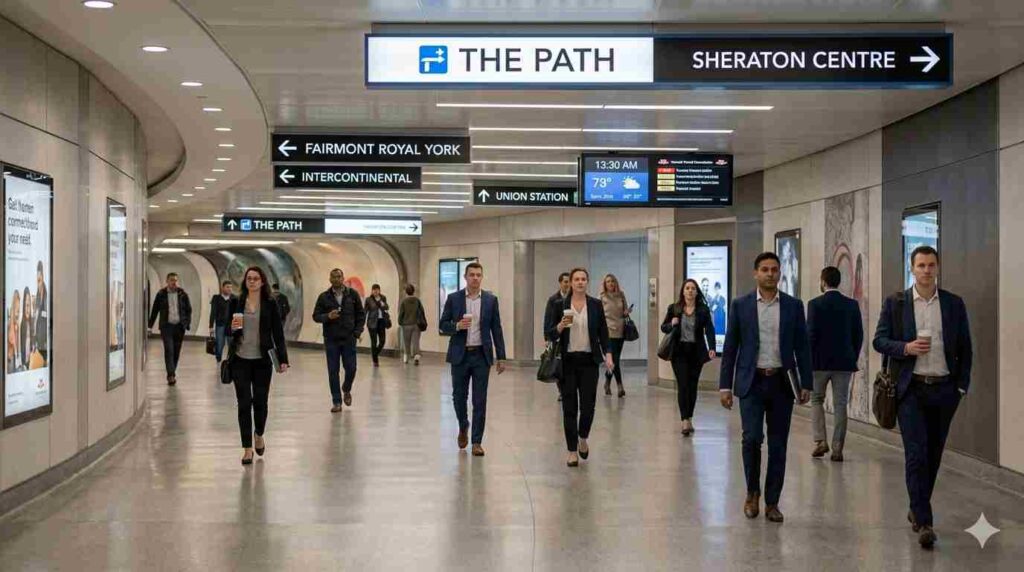
Overlooking the PATH. Many tourists brave freezing winter weather outside without realizing their hotel. The Sheraton Centre and Fairmont Royal York among them, connects directly to a 30km underground shopping and transit network.
Assuming “downtown” is small. Walking from the Distillery District to High Park runs close to 10 kilometers. It’s worth planning your days by zone (east, central, west) rather than treating downtown as one walkable unit.
Underestimating the airport commute cost. Staying near Pearson to save money only makes sense if you have an early flight. The UP Express train runs about $12 each way, which adds up fast for a family making daily trips into the city.
Skipping housekeeping tips. In Canada, it’s customary to tip $2–$5 per day for housekeeping. Tipping daily, rather than only at checkout, tends to get better service throughout the stay.
Comparing Toronto’s Major Hotel Districts
| District | Primary Vibe | Average Room Size | Top Choice |
|---|---|---|---|
| Yorkville | Upscale and refined | 550+ sq. ft. | Park Hyatt |
| Entertainment District | High-energy and modern | 400–500 sq. ft. | Nobu Hotel |
| Financial/Core | Historic and polished | 450–650 sq. ft. | Fairmont Royal York |
Frequently Asked Questions
Is it safe to stay downtown east of Yonge Street? Areas like Moss Park have significant rates of homelessness and are currently undergoing redevelopment. For a first-time visitor, staying west of Yonge Street or in the Distillery District tends to feel more familiar and tourist-oriented, though the entire downtown core is generally walkable and safe during the day.
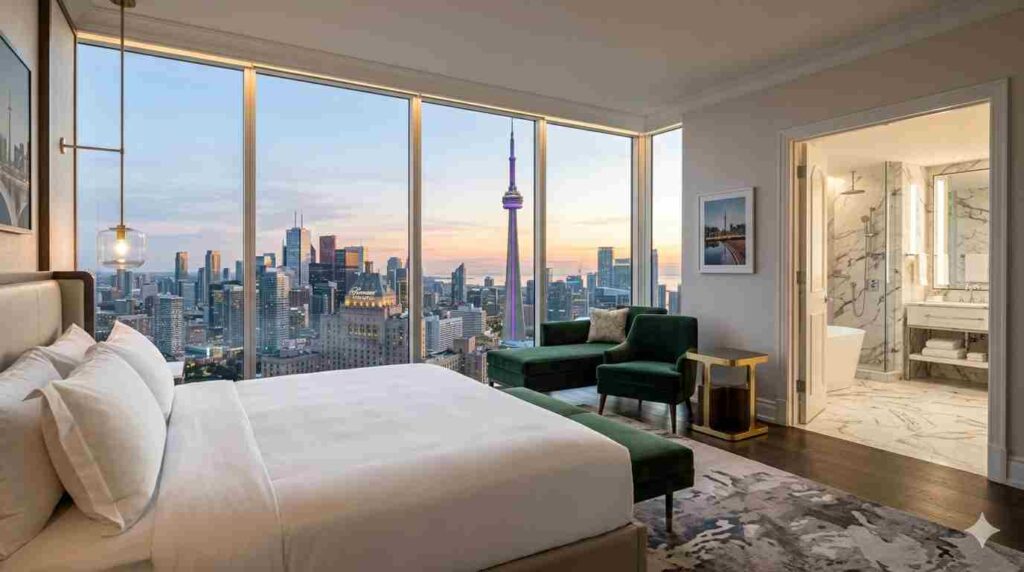
What’s the best hotel for a view of the CN Tower? Delta Hotels by Marriott Toronto, near Lower Simcoe, is known for rooms with soaker tubs positioned to look directly at the tower.
Do I need to tip hotel staff in Toronto? Yes. The standard is $2–$5 per day for housekeeping and around $2 per bag for bellhops.
Can I use US dollars in Toronto hotels? Most will accept them, but usually at a poor exchange rate. Paying by credit card or withdrawing Canadian dollars from an ATM generally gets you a better rate.
Are Toronto hotels pet-friendly? A large share of downtown boutique hotels now welcome pets. The Westin Harbour Castle and 1 Hotel are both known for dedicated pet programs.
For finding the right rate once you’ve picked a neighborhood, our guide to the best hotel booking websites covers where to actually search.
Conclusion
Choosing the best hotel in Toronto for a 2026 trip comes down to balancing accessibility with atmosphere. First-time visitors tend to do best in the Financial or Entertainment District, close to the PATH and Union Station. Returning travelers looking for something with more local character often prefer Queen West or Riverside instead.
Wherever you end up staying, Toronto is fundamentally a city of neighborhoods, your hotel is really just a base. The real experience tends to happen in the side streets, the dim-sum spots along Spadina, and the sunset views from the Toronto Islands.