


































By Nneoma Ogbureke, Study Abroad Consultant at At Every Moment Travels And Tours | Last updated: October 2026
If you’ve ever stared at a scholarship page at midnight and thought, “Who actually wins these?”, this guide is for you. Here’s the honest answer: prepared people win them. Not geniuses. Not people with secret connections. People who started early, read the rules carefully, and told their story well.
Below is how to win a scholarship to study abroad, step by step. It’s the same advice I’d give a friend sitting across from me. With over 5 years of experience, I’ve helped more than 50 students successfully relocate to study in the UK, Canada, USA, Germany, Ireland, Australia, Malaysia, and Malta. From choosing the right course and university to admissions and visa support, I guide you at every step.
Quick disclosure: we’re an independent consultancy, not affiliated with any scholarship provider. Always confirm deadlines and rules on the official website before you apply.
The short answer
To win a scholarship to study abroad, you need four things:
- Early start: many fully funded awards close 10 to 12 months before the course starts.
- Right fit: apply only where you meet the rules.
- Strong story: your essay should show who you are and what you’ll do with the opportunity.
- Clean paperwork: every document ready, correct and on time.
Now let’s walk through it.
Step 1: Start 12 to 18 months before you travel
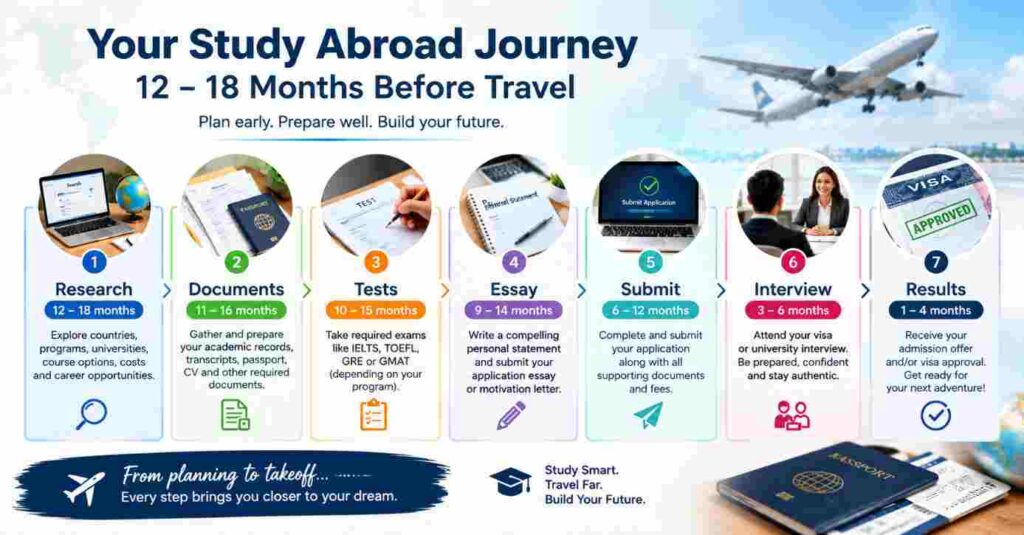
This is where most people lose. They begin searching three months before they want to go, and by then many deadlines have passed.
Take a September 2027 start. Several top awards have already opened or closed in 2026. Chevening’s 2027/28 round, for example, closes on 6 October 2026 at 11:00 UTC, with interviews held in March to April 2027 and results from mid-June 2027. Work backwards from your target start date and write each deadline on a calendar.
Step 2: Understand the types of scholarships
Not all scholarships work the same way. Knowing the type saves you weeks of confusion.
- Government-funded: Chevening (UK), DAAD (Germany) and Fulbright (USA) are examples.
- University-funded: the school itself rewards strong applicants.
- Foundation or organisation-funded: often aimed at particular fields or backgrounds.
“Fully funded” usually means tuition, living costs and flights are covered. Check exactly what’s included, because visa fees, test fees and dependents are sometimes left out. Before you proceed, our ultimate guide to fully funded education will explain the top ten fully funded scholarships for Nigerians.
Step 3: Check your eligibility honestly
I know it’s tempting to apply for everything. Please don’t. Applying where you don’t qualify costs you time and energy.
Read the eligibility page line by line. Look at your nationality, degree level, years of work experience, age limits, language requirements and any rule about returning home after your studies. Chevening, for example, requires scholars to return to their country of citizenship for a minimum of two years after the award ends.
Step 4: Build a smart shortlist to help you win a scholarship
Aim for five to eight scholarships that fit you, across a mix of “dream” and “realistic” options. Some have limits on how many you can apply to at once. Erasmus Mundus, for instance, lets you apply to a maximum of three Joint Master’s programmes in one year.
For each scholarship, make a simple sheet with the deadline, what’s covered, documents needed and the application link. That sheet becomes your control panel.
Step 5: Sort out your admission
Scholarship and admission are often two separate tracks, and the order differs from one award to another.
- Chevening: you apply for the scholarship first, then must hold at least one unconditional UK university offer by 8 July 2027 for this round.
- Erasmus Mundus: there is no central application portal. You apply directly to each programme and tick the scholarship option.
- DAAD EPOS: you apply directly to the course, and can apply to a maximum of three EPOS courses in one cycle.
Always check which route your scholarship uses before you spend weeks on the wrong form.
Step 6: Gather your documents early
Documents are the slow part, especially transcripts and reference letters. Start collecting these now:
- Passport or national ID
- Academic transcripts and certificates
- CV or résumé
- Personal statement or motivation letter
- Two or three reference letters
- English language test results, where required
If a certificate needs to be requested from your school, do it in week one, not week ten.
Step 7: Prepare for language tests
Many scholarships ask for IELTS or TOEFL. Some DAAD EPOS courses, for instance, accept IELTS 6.5 overall or TOEFL iBT 88 and above. Some awards allow exemptions or alternatives, such as when your previous degree was taught in English. Never assume. Check the provider’s own rules.
Book your test early. Results can take time, and you may want a retake. Our complete IELTS guide for immigration and study abroad will walk you through the IELTS process from administrative requirements through exam strategy.
Step 8: Write a personal statement that sounds like you
This is the heart of your application, and it’s where winners separate themselves.
Selection panels read hundreds of essays. The ones that stand out are specific, honest and clearly connected to a plan. Here’s a structure that works:
- Open with a real moment. A problem you saw, a challenge you faced, a decision that changed your direction.
- Show what you’ve done about it. Projects, work, volunteering, leadership. Use numbers where you can.
- Explain why this course and this country. Name modules, researchers or opportunities that fit your goals.
- Say what happens next. How you’ll use the degree to make a difference at home, in your career or in your community.
A few things I’d tell you over a cup of tea: avoid clichés like “I have always been passionate about…”, never copy sample essays, and read your draft out loud. If it doesn’t sound like you, rewrite it.
Step 9: Choose and brief your referees
Pick people who know your work well, such as a lecturer, supervisor or manager. A famous name who barely knows you writes a weaker letter than a lecturer who has watched you grow.
Give them at least a month. Send them your CV, the scholarship details and a short note on what you’d like them to highlight.
Step 10: Submit early and prepare for the interview
Submit at least a few days before the deadline. Websites slow down and files fail to upload, and no one extends the deadline because of your internet connection.
If you’re shortlisted, treat the interview as a conversation, not an exam. Practise talking about your goals, your achievements, your chosen course and your plan for returning or applying what you’ve learned. Chevening, for example, interviews shortlisted candidates through local British embassies or high commissions.
Scholarships to watch right now (October 2026)
Dates change, so treat this table as a starting point and confirm on each official site.
| Scholarship | What to know right now |
|---|---|
| Chevening (UK) | The 2027/28 round closes on 6 October 2026. If you’ve missed it, start preparing for the next round now. |
| Erasmus Mundus Joint Masters (Europe) | Most 2027 programmes accept applications between October 2026 and January 2027, and funding can reach up to €1,400 a month. |
| DAAD EPOS (Germany) | Deadlines cluster between June and October 2026 and vary by course. It’s aimed at professionals from developing countries with work experience. |
| Commonwealth Master’s (UK) | 2027/28 dates were not yet confirmed at the time of writing, so keep watching the official sites. |
| Fulbright (USA) | Apply through the Fulbright commission or US embassy in your country, since deadlines differ by country. |
Mistakes that quietly sink applications
- Applying without reading the eligibility rules
- Submitting a generic essay to every scholarship
- Missing small instructions, such as word limits or file formats
- Leaving referees until the last week
- Trusting anyone who asks you to pay a “selection fee”
On that last point: real government and university scholarships don’t charge you to be chosen. If someone promises a guaranteed scholarship for a fee, walk away.
Frequently asked questions
When should I start applying for scholarships?
Ideally 12 to 18 months before your intended start date. Some of the biggest awards close almost a year before classes begin.
Can I get a scholarship with average grades?
It’s harder, but not impossible. Grades matter, yet panels also weigh work experience, leadership, community impact and the quality of your plan. Strengthen what you can control.
Do I need IELTS for every scholarship?
Not always. Many require it, and some allow exemptions or alternatives. Check each provider’s language rules.
How many scholarships should I apply for?
Several. Applying to five to eight well-matched options is far better than one long shot or fifty poor fits.
Do I need an admission offer before I apply?
It depends. Some awards need an offer at a later stage, while others have you apply straight to the programme. Read the process for each one.
Final thoughts
Winning a scholarship to study abroad isn’t about luck. It’s about timing, fit and a story only you can tell. Start early, stay organised, and give every application your real voice.
If you’d like a second pair of eyes on your essay, shortlist or documents, book a free consultation with us At Every Moment Travels And Tours → Contact us. I’d love to help you take this step.
Official sources to double-check: Chevening (chevening.org/application-timeline), DAAD EPOS (daad.de/epos), Erasmus Mundus catalogue (eacea.ec.europa.eu).
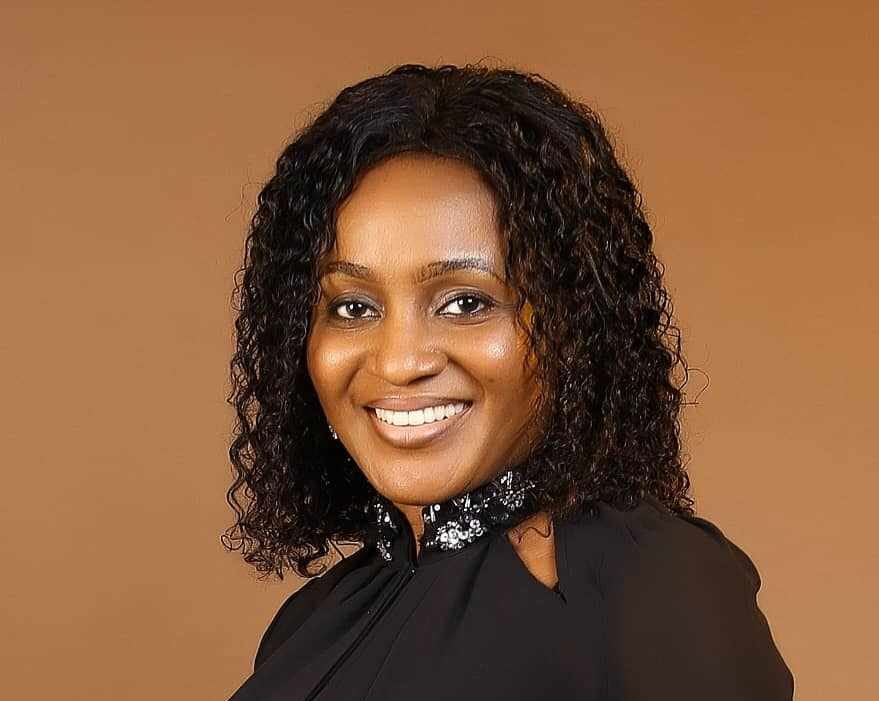
About the author: Nneoma Ogbureke is a study abroad consultant at At Every Moment Travels And Tours. For over 5 years, I have helped 50+ students turn their study abroad dreams into reality across the UK, Canada, USA, Germany, Ireland, Australia, Malaysia, and Malta. Let me guide you through every step, so you can move forward with confidence.