

































From experience over the years, clients always ask our team at Every Moment Travels And Tours for guide on moving to Finland.
Finland has a way of showing up on every “best country” list — happiest country in the world, safest, best work-life balance, cleanest air. But a ranking doesn’t tell you how to actually get there, what a residence permit costs, or how you’ll feel during your first November without much daylight.
This guide is written for people who are past the “should I move to Finland” daydream and into the “okay, how do I actually do this” stage — whether you’re applying to a Finnish university, chasing a job offer, or simply drawn to a country that consistently gets quality of life right. We’ve pulled together the most current figures we could verify from Finland’s own immigration and social security authorities, alongside cost-of-living data from 2026, so you’re planning with real numbers instead of guesswork.
A quick but important note before we start: immigration rules, income thresholds, and fees change — sometimes more than once a year, as Finland did in January 2026 with its permanent residence requirements. Treat every figure below as a planning estimate, and always confirm the current details on Migri.fi (the Finnish Immigration Service) or with a licensed relocation advisor before you submit an application.
Why So Many People Are Choosing Finland Right Now
Finland isn’t flashy. There’s no beach, no bullet train network stretching across the country, and Finns aren’t famous for chit-chat. What moving to Finland offers instead is stability: free public education through the doctoral level, a healthcare system funded through taxes rather than employer plans, one of the lowest crime rates in Europe, and a culture that genuinely protects personal time. Add a growing shortage of skilled workers in technology, engineering, healthcare, and construction, and you get a government that’s actively trying to attract — not just tolerate — newcomers.
That combination is why Finland’s international student and worker population has been climbing steadily, and why the country has set a public target of welcoming 15,000 new international students a year by 2030.
Step 1: Figure Out Which “Path” Into Finland Is Yours
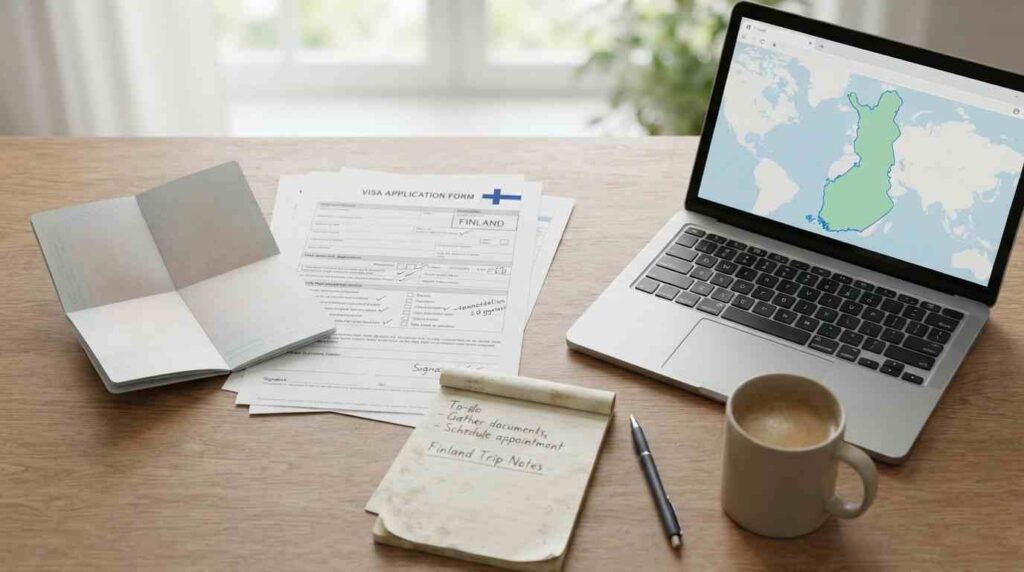
Before anything else, sort yourself into one of two broad categories, because the process is completely different depending on where you’re starting from.
If you’re an EU, EEA, Nordic, or Swiss citizen: you can move, live, work, and study in Finland freely. You’ll still need to register your right of residence with Migri if you’re staying longer than three months, and pick up a municipality registration (kotikunta) from the Digital and Population Data Services Agency, but there’s no permit application or income threshold to clear.
If you’re a non-EU/EEA citizen: you’ll need a Finnish residence permit for any stay longer than 90 days. Finland’s permit system uses letter codes that matter more than most newcomers expect, because they determine your rights and how quickly you can eventually apply for permanent status:
- Type B (temporary): issued for a fixed period, often for shorter study programs. It does not count toward permanent residence.
- Type A (continuous): the main category for anyone settling in for the longer term. Most work and degree-study permits fall here.
- Type P / P-EU (permanent): unlimited residence, reached after several years on a Type A permit.
Since 8 January 2026, Finland tightened the rules around permanent residence. The general route now requires six years of continuous residence on a Type A permit, though faster paths exist. Four years with an annual income above €40,000, or four years with three years of work history and strong Finnish or Swedish language skills. Choosing the correct permit ground at the very start matters, because switching later can add years to your timeline.
Moving to Finland to Study
If you’re considering moving to Finland against the usual “big four” study destinations that is the US, UK, Canada, and Australia, here’s what actually matters for your budget and paperwork:
1).Tuition: EU/EEA and Swiss students pay no tuition at Finnish public universities, only a modest annual student union fee. Non-EU/EEA students typically pay between roughly €8,000 and €18,000 a year at research universities, and somewhat less at universities of applied sciences (AMKs). Doctoral studies remain tuition-free for every nationality.
2). Scholarships: This is where Finland quietly outperforms its reputation. Most Finnish universities apply scholarships or tuition waivers automatically as part of your admission review. You generally don’t submit a separate scholarship application. Waivers of 50–100% are common for strong applicants, and some universities’ flagship scholarships bundle a living-cost stipend on top of the tuition waiver.
3). Proof of funds: To get a student residence permit, Migri needs to see that you can support yourself. The accepted benchmark is around €800–€900 per month of proven funds for the length of your stay, on top of tuition already paid or waived.
4). Working while you study: Non-EU/EEA students on a study residence permit can work an average of 30 hours a week during term time, with no cap during holiday periods, and unlimited hours if the work is a required part of your degree (like a thesis placement or practical training). This was raised from 25 hours in 2022, and it’s more generous than most European study destinations.
5). After graduation: Finland allows graduates to apply for a residence permit specifically to look for work or start a business, giving you a runway to convert your degree into a longer-term stay.
If you’re applying with a scholarship-first strategy, start early. Most Finnish scholarship decisions happen at the same time as admission decisions, so a strong academic application is doing double duty.
Moving to Finland to Work
For non-EU/EEA professionals, three permit categories cover most cases:
- Residence Permit for an Employed Person (TTOL): the standard route, tied to a specific job offer that meets Finland’s minimum salary threshold.
- Specialist Permit (fast-track): aimed at IT specialists, engineers, and similarly skilled roles, with a notably faster processing track — often just a few weeks.
- EU Blue Card: for highly qualified professionals with a relevant degree (or, in some fast-moving fields, several years of verified equivalent expertise) and a job offer above a higher salary threshold than the standard route.
Salary thresholds for these permits have moved more than once in the last two years, so treat any number you read — including here — as a starting point to verify on Migri’s site or the EU Immigration Portal before you apply. As of early 2026, the specialist and Blue Card tracks generally required a gross monthly salary in the high-€3,000s to low-€5,000s range, depending on the category.
Where the demand actually is: Finland’s clearest skill shortages sit in software engineering, cloud and cybersecurity, healthcare (nurses and doctors especially), and skilled trades tied to construction and the renewable energy build-out; electricians, welders, HVAC technicians, and civil engineers. If your field falls into one of Finland’s officially recognized shortage occupations, you may be able to start work even in roles not explicitly listed on your permit.
What It Actually Costs to Live in Finland
Moving to Finland isn’t cheap, but it’s also not the budget-breaker some expect once you factor in what taxes already cover for you.
Rent is the biggest line item and varies sharply by city. A one-bedroom apartment in central Helsinki typically runs €1,050–€1,350 a month; outside the city centre, or in cities like Tampere and Turku, €650–€900 is more realistic.
Everyday costs: budget roughly €300–€450 a month on groceries for one person, €60–€80 for a monthly public transport pass, and €150–€250 for basic utilities in your own apartment.
Salary reality check: the average gross salary in Finland sits somewhere in the €3,200–€4,600 range depending on the source and sector. Take-home pay typically landing around €2,300–€3,300 a month after tax. In Helsinki specifically, a “comfortable” (not luxurious) single-person lifestyle generally needs a gross salary above roughly €3,500 a month once rent, food, and transport are all in.
The upside: your taxes are already paying for things you’d otherwise budget separately. Things like healthcare, education for any kids you bring, and one of the more generous parental leave systems in Europe.
Taxes: What You’ll Pay, and What You Get Back
Finland’s income tax is genuinely progressive and made up of two layers: a national tax that scales with income (roughly 12–37% depending on your bracket, or up to around 44% at the very top before local tax is added), plus a flat municipal tax that varies by city, typically landing between 4.7% and 10.9%. Add employee social insurance contributions of around 8–9%, and total effective tax rates commonly land somewhere between 20% and 35% for typical salaries — climbing higher for top earners.
If you’re arriving as a qualifying foreign specialist, ask about Finland’s “key employee” flat tax regime. It applies a reduced flat rate (recently lowered) instead of the standard progressive scale, and can meaningfully change your take-home pay if you qualify. It has to be applied for within 90 days of starting work, so it’s worth raising with your employer before your first paycheck.
Healthcare: How the Kela System Works
Once you’re registered as a resident and meet the income threshold (roughly €800 a month in earnings, as of 2026), you become eligible for Finland’s public healthcare system through Kela, the Finnish social security agency. You’ll receive a Kela card, which unlocks subsidized public health centre visits (often a small co-pay in the €20–€30 range) and discounted prescriptions.
There’s an important gap to plan around: Kela registration can take several weeks after you arrive, and until it clears, you’re only covered for emergencies. Non-EU newcomers especially should arrange private or travel health insurance to bridge that window — most residence permit applications actually require proof of insurance for exactly this reason. Once you’re fully in the system, private clinics remain widely used for convenience and shorter wait times, even by people who qualify for public care.
Where to Live: Comparing Finland’s Best Cities for Newcomers
Helsinki gets most of the attention, but it’s genuinely worth looking beyond it:
- Helsinki: the deepest job market, the most international schools, and the biggest expat community. It is at the highest rents in the country.
- Espoo: technically its own city but effectively part of greater Helsinki, home to major tech employers, with a slightly calmer, more residential feel.
- Tampere: Finland’s largest inland city, frequently rated the best city in the country for combined work and quality of life, with rents noticeably lower than Helsinki and a 90-minute high-speed train to the capital.
- Turku: milder winters than most of the country, a strong biotech and university presence, and some of the most walkable, historic city streets in Finland.
- Oulu: a genuine tech hub in the north, known for wireless technology and engineering roles, with a smaller but active international community.
If your job or program gives you a choice, weigh climate tolerance as seriously as salary. The difference between Turku’s milder coastal winters and the far north’s true polar darkness is bigger than most newcomers expect.
The Honest Part: Culture, Winters, and What Actually Surprises People
This is the section most relocation guides gloss over, and it’s the part that determines whether your move feels exciting or isolating in year one.
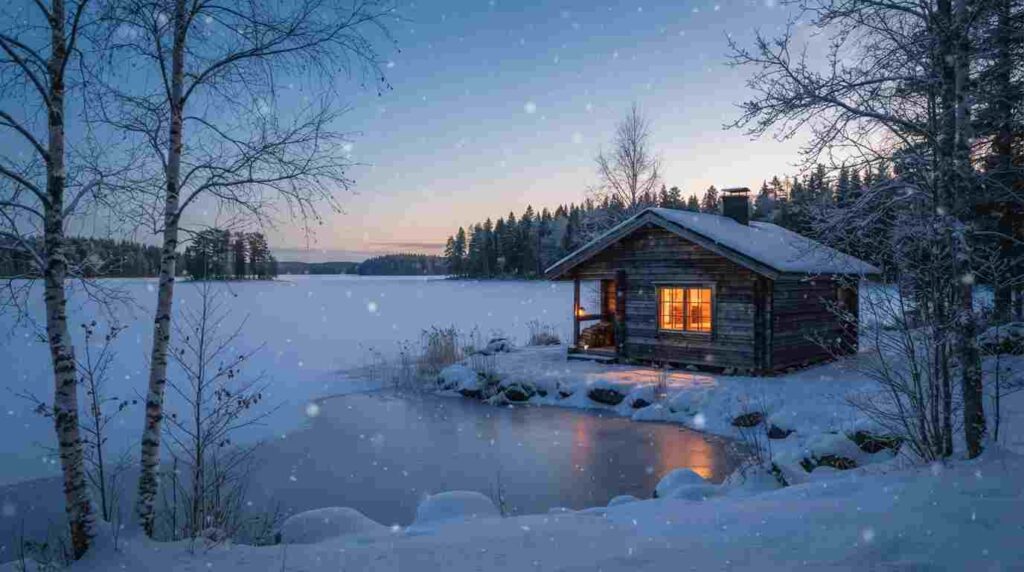
The darkness is real. Depending on where you live, winter daylight can shrink to just a few hours a day, and it affects mood and sleep for a lot of newcomers, not just a sensitive few. Vitamin D, a light-therapy lamp, and simply getting outside during the brightest midday hours are the most commonly recommended coping tools. This is worth building into your routine from day one rather than after a rough month.
Small talk isn’t the social currency here. Finns generally value direct communication, comfortable silence, and personal space over casual chit-chat. It’s not coldness, it’s a different definition of politeness. But it does mean friendships tend to form slowly, often through hobbies, clubs, or shared work, rather than quick social warmth. Go in expecting to invest time, not instant connection.
Bureaucracy takes patience. Between Migri, Kela, the tax office, and your municipality, Finland’s systems are efficient but methodical. Processing times can stretch to weeks or months, and applying too early or too late for a renewal can create real problems — mark your permit expiry date the day you receive it.
The payoff is real too. Once you’re through the adjustment period, most expats describe a level of everyday trust and calm that’s hard to find elsewhere; unlocked doors, reliable public services, genuinely unplugged evenings and weekends, and easy access to forests, lakes, and sauna culture that becomes part of normal life rather than a novelty.
Your Pre-Move Checklist To Moving To Finland
- Confirm your path (study, work, or family) and identify the exact permit category before you apply.
- Apply for your residence permit early, through Enter Finland if you’re outside the country, and budget for identity verification at an embassy, consulate, or VFS centre.
- Sort your proof of funds — bank statements, scholarship letters, or an employment contract, matched to what your specific permit requires.
- Arrange bridge health insurance to cover the gap before your Kela registration is active.
- Line up housing before landing if you can — student housing and popular city-centre apartments move fast, especially around the August intake.
- Budget for the first three months separately — deposits, initial furnishing, and winter clothing add up before your first Finnish paycheck or stipend lands.
- Register your address and municipality with the Digital and Population Data Services Agency shortly after arrival — this unlocks your Kela eligibility and much of daily life.
- Mark every renewal date the moment you receive a permit card.
Common Mistakes That Delay or Derail Moving to Finland
- Applying for the wrong permit ground. Choosing based on speed rather than your actual long-term goal (say, a temporary B permit when you needed a continuous A permit) can cost you years on the path to permanent residence.
- Letting a permit lapse before renewal. Applying after expiry is treated as illegal residence — always start the renewal process one to two months ahead.
- Underestimating the funds requirement. Migri checks proof of funds closely, and a bank balance that looks fine on paper but doesn’t match the required monthly threshold is a common rejection reason.
- Skipping insurance during the Kela gap. A medical bill during your first uncovered weeks in Finland can be a genuinely expensive lesson.
- Assuming English is enough long-term. English gets you remarkably far in Finnish workplaces and daily life, but Finnish or Swedish proficiency opens more of the job market and is required for most citizenship and faster permanent-residence tracks.
Frequently Asked Questions
Do I need to speak Finnish to move there? Not to arrive, work in many sectors, or study in an English-taught program. English is widely spoken, especially in tech, research, and academic settings. But learning Finnish (or Swedish) meaningfully widens your job options and is required for most paths to citizenship.
How long does a Finnish residence permit take to process? It varies widely by category and season. Anywhere from a couple of weeks for fast-track specialist permits to a few months for standard applications. Always check Migri’s current published processing times for your specific permit type before planning a move date.
Can my family come with me? Yes. Finland has dependent residence permit categories for spouses and minor children tied to a primary permit holder, and dependents are generally allowed to work or study once their own permit is granted.
Is Finland expensive compared to other Nordic countries? Generally, no. Moving to Finland tends to run somewhat cheaper than Sweden, Denmark, and especially Norway on rent and everyday costs, while offering comparable public services.
What’s the biggest adjustment for most newcomers? Almost universally, it’s the winter darkness combined with the slower pace of forming friendships — not the paperwork, which is methodical but ultimately manageable with good preparation.
Final Thoughts
Finland rewards people who plan carefully and arrive with realistic expectations more than almost any other country we cover. The systems are fair and well-run, but they’re not designed to be rushed. Get your permit category right from the start. Then build your first-three-months budget honestly, and go in expecting a slow-burn kind of belonging rather than instant ease. Finland tends to deliver exactly the quality of life it’s known for.
If you’re at the stage of choosing between moving to Finland and other study or work destination. Or you want a second set of eyes on your scholarship application, permit paperwork, or timeline — that’s exactly the kind of planning our team at At Every Moment Travels And Tours works through with clients every week. Reach out and we’ll help you map a plan that fits your specific situation.
This guide is provided for general informational purposes and does not constitute immigration, legal, tax, or financial advice. Immigration requirements, income thresholds, and fees change and can vary by individual circumstance. Always verify current details directly with Finland’s official immigration authority (migri.fi), Kela (kela.fi), the Finnish Tax Administration (vero.fi), or a licensed relocation advisor before making decisions or submitting an application. Figures in this article reflect publicly available information as of August 2026.