































International travel opens up an exciting new view of the world — but incorrect documentation can derail that excitement fast. At Every Moment Travels, we see this happen more often than people expect: a traveler misses one required document, and it causes real problems at immigration.
According to IATA (the International Air Transport Association), roughly 60,000 travelers get turned back at their destination or a transfer point by immigration authorities each year. That’s a genuinely stressful and frustrating outcome for the traveler, and it costs airlines worldwide a substantial amount in fines and associated costs too — traveling with incorrect documentation isn’t a minor issue for anyone involved.
To avoid this, ask yourself two questions before any international trip: what documents do I actually need to travel, and what will the airport specifically ask for at check-in? Travel policies vary meaningfully from one country to another, so confirm you meet your destination’s specific requirements before you start gathering documents, not after.
Travel Documents Checklist
Here are the major documents you’ll need for most international trips.
1. Valid International Passport
Your international passport ranks among the most essential documents for any international trip — get one early if you don’t already have one.
Nigeria’s Immigration Service has streamlined the application process in recent years. New applications now generally take around six weeks to process, and renewals around three weeks — both meaningfully faster than in the past.
If you already hold a passport, check its expiry date carefully. In most countries, you need at least six months of validity remaining beyond your planned arrival date. Confirming this ahead of time saves you from a genuinely unfortunate situation at the airport.
2. Travel Visa
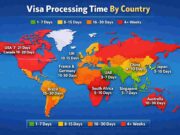
Visa requirements depend heavily on your nationality, so check your destination country’s specific visa policy before you plan anything else. You can apply directly through the embassy or consulate, or through a reputable online visa provider.
Some countries offer visa-free entry, meaning only a valid passport gets you in and out. Others offer visa on arrival, where you obtain the visa right at the airport. If neither applies to you, apply for your visa well ahead of time — the process can take weeks, and some countries also require proof of travel insurance before they’ll grant one.
3. Copies of All Identification Documents
Proper identification underpins both domestic and international travel, so always carry an official identification document with you — your passport, birth certificate, national ID card, or driver’s license all work depending on the context.
Making copies of these matters just as much as carrying the originals. They serve as backup proof of identity and citizenship, and they become especially valuable if you lose your passport and need to prove your citizenship at your country’s embassy or consulate abroad.
4. Flight Ticket
Your flight ticket confirms your reservation and is required for check-in, whether you hold it as a physical printout or an electronic version received by email. Booking early, whether online or through a trusted travel agency, generally gets you a better price than waiting until closer to your travel date.
For more on saving money on flights specifically, our guide to cheaper flight tickets in Nigeria covers this in detail.
5. Proof of Accommodation / Hotel Reservation
Most countries ask for proof of accommodation at immigration, whether you’re traveling on a visa or visa-free. A copy of your hotel reservation, or an invitation letter from a relative or friend at your destination, both work as valid proof.
6. Travel Itinerary Details
Your itinerary — flight details, accommodation reservations, and any car rental confirmations — ties your whole trip together. Keeping track of every reservation gets genuinely difficult without a consolidated copy on hand, and a clear itinerary smooths out check-in at both the airport and your hotel.
Print a physical copy, or use one of the many travel planner apps available, and consider setting yourself reminders for check-in windows or airport transport ahead of time.
7. Health Travel Documents
Health documentation isn’t new to international travel — some countries have long required proof of vaccination, such as a yellow fever certificate, well before COVID-19 made health documents a broader talking point. Pandemic-era entry requirements have eased considerably since then, but rules can still shift with little notice, so check your destination’s current requirements shortly before departure rather than relying on older information. Missing a required health document can, in some cases, result in denial of entry.
8. International Health Declaration Form
Some destinations require an International Health Declaration Form, a document confirming you’re healthy and that the information you’ve provided is accurate. It typically serves as a fallback when you can’t provide on-site testing proof for a valid reason, and you generally keep the signed document with you rather than surrendering it.
9. Travel Insurance Proof
Travel insurance covers medical emergencies, trip cancellations, lost luggage, and other unexpected costs that can come up during a trip. Apply for coverage well ahead of your departure date so you’re genuinely protected against anything unforeseen. Our complete travel insurance guide walks through what a solid policy should include.
One More Thing Worth Packing
Beyond the documents above, it’s worth carrying local currency for your destination rather than relying entirely on a credit or debit card abroad — it’s a simple way to avoid currency exchange fees that add up quickly.
It’s also worth keeping the contact numbers for your embassy or consulate and local emergency services somewhere easy to find, along with contacts for family and friends back home. None of these cost anything to prepare, and all of them matter far more in the moment you actually need them.
Conclusion
Getting your documentation right before an international trip isn’t just bureaucratic box-checking — it’s what stands between a smooth arrival and a genuinely stressful situation at immigration. Work through this checklist well before your departure date, confirm your destination’s specific requirements directly with official sources, and you’ll head into your trip with one less thing to worry about.








Greetings! I’ve been reading your website for some
time now and finally got the bravery to go ahead and give you a shout out from Houston Texas!
Just wanted to mention keep up the excellent work!
Thank you for your beautiful comments. We really appreciate it so much.
Thank you so much for your positive reviews. This encourages us to do more with subsequent articles.
[…] Keep documents easily accessiblehttps://everymomenttravels.com/major-documents-required-international-travel/ […]
[…] Visa Application Guide for Popular Destinations International Travel Tips: A Complete Guide for First-Time Travelers 9 Major Documents Required for International Travel […]