































Introduction: A Genuinely Different Landscape in 2026
Canada remains one of the most sought-after study destinations for international students, but 2026 looks meaningfully different from a few years ago. The federal government has capped the number of study permits it issues, tightened financial requirements, and raised the bar on documentation. These are some changes that genuinely affect how prepared an applicant needs to be before submitting.
At Every Moment Travels, we help students navigate exactly this shifting landscape. This guide walks through what studying in Canada actually requires in 2026: the cap, the current financial threshold, the application process, and the mistakes that most often derail an otherwise strong application.
What Actually Changed for 2026
Canada’s international student cap, introduced in 2024, limits how many study permit applications Immigration, Refugees and Citizenship Canada (IRCC) will accept into processing each year. IRCC expects to issue up to 408,000 study permits in 2026 — 155,000 to newly arriving students and 253,000 as extensions for students already in Canada. That’s roughly 7% below the 2025 target and 16% below 2024’s.
The financial requirement has also risen. As of September 1, 2025, a single applicant applying outside Quebec must show CAD $22,895 in living expenses for the first year, on top of tuition and travel costs — up from $20,635 previously. That figure adjusts annually every September 1, tied to Statistics Canada’s Low-Income Cut-Off, so confirm the current number directly on IRCC’s website before you plan your budget around it.
One genuine piece of good news: as of January 1, 2026, master’s and doctoral students at public designated learning institutions no longer need to submit a Provincial or Territorial Attestation Letter (PAL/TAL) with their application — that exemption applies specifically to public institutions, so students at private colleges still need one.
Why Study in Canada Despite the Tighter Rules
Even with a more competitive system, Canada still offers real advantages: globally recognized universities, a genuine multicultural environment, comparatively affordable tuition relative to the US and UK, a real post-graduation work permit pathway, and a defined route toward permanent residency for graduates who build Canadian work experience. For students weighing this against other destinations, our comparison of the UK and Canada for international students is worth reading alongside this guide.
The Application Process, Step by Step
Step 1: Choose Your Program and Institution
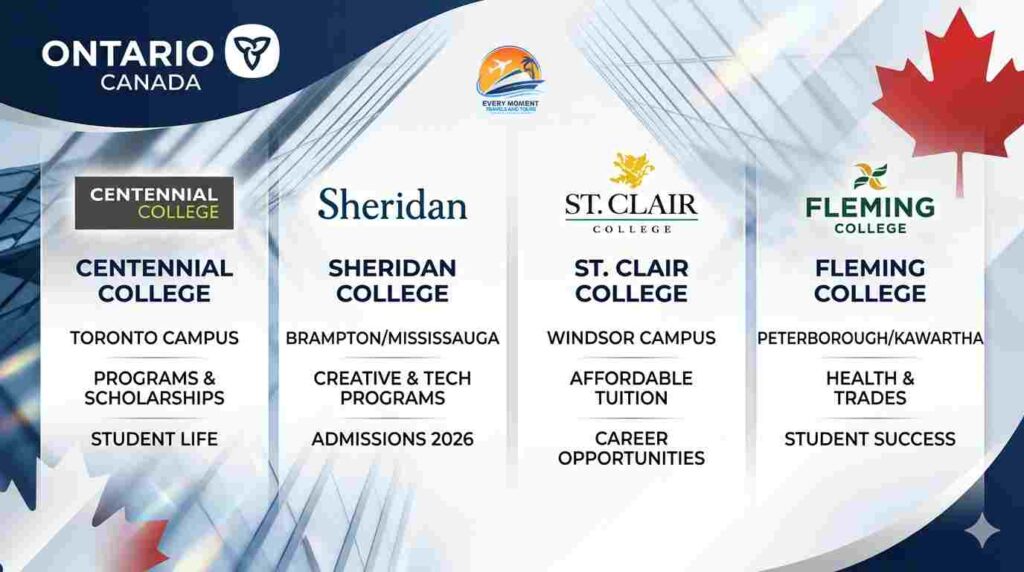
Research designated learning institutions (DLIs) — only DLIs can host international students, so confirm your target school’s DLI status before applying. Weigh program reputation, cost, location, and post-graduation work permit (PGWP) eligibility, since not every program qualifies a graduate for a PGWP.
Step 2: Secure Your Letter of Acceptance
You need a formal letter of acceptance from your DLI before you can apply for a study permit. Processing times for admissions decisions vary by institution, so apply with real lead time.
Step 3: Obtain Your PAL/TAL, If Required
Most undergraduate and college-level applicants need a Provincial or Territorial Attestation Letter from their institution before IRCC will process their study permit application. Once a province’s allocation of PALs fills for the cycle, no further applications from that province’s institutions get accepted — so this step genuinely rewards applying early. Master’s and doctoral students at public institutions are exempt as of 2026.
Step 4: Prepare Your Proof of Funds
Gather documentation showing you meet the current $22,895 threshold (plus tuition and travel), and be ready to show where the money actually came from — IRCC now checks the source of funds in every application, not just flagged cases, and requires six months of bank statement history rather than four. Acceptable proof generally includes a Canadian bank account with transferred funds, a Guaranteed Investment Certificate (GIC), an education loan, a sponsor letter backed by evidence of the sponsor’s own means, or proof that tuition and housing are already paid.
Large, unexplained deposits shortly before applying are a common red flag — officers are specifically trained to look for funds that appear staged rather than genuinely accumulated over time.
Our full guide to proof of funds requirements covers this in more depth.
Step 5: Complete Your Study Permit Application
Apply online through IRCC’s portal in most cases. You’ll need your letter of acceptance, your PAL/TAL if required, proof of funds, a valid passport, and passport photographs, along with biometrics and a medical exam where applicable.
Step 6: Prepare for Possible Additional Documentation Requests
IRCC officers can now request supplementary employment and financial documents in any case, without first needing to flag the application as high-risk. Respond to any request promptly and completely — an incomplete response is one of the more common causes of delay at this stage.
For a broader look at how proof of funds requirements compare across countries, our complete guide to student visas is a useful companion read.
Financial Requirements Snapshot (2026)
| Category | Amount (CAD) |
|---|---|
| Single applicant (living expenses, outside Quebec) | $22,895/year |
| Applicant + 1 family member | $28,502/year |
| Applicant + 2 family members | $35,040/year |
These figures cover living expenses only — tuition and return travel costs come on top, and Quebec applies its own separate threshold. IRCC adjusts these amounts every September 1, so treat this table as a snapshot and confirm the current figure directly on canada.ca before you apply.
Common Mistakes That Cause Refusals

Using outdated financial figures. The threshold moved from $20,635 to $22,895 in September 2025 — applications built around the old number fall short by more than $2,000.
Treating the living-expense figure as the total requirement. The $22,895 doesn’t include tuition or travel — omitting either is a common and avoidable error.
Submitting funds with no traceable source. A healthy bank balance alone isn’t enough anymore; officers want to see where the money genuinely came from.
Missing the PAL/TAL requirement. Most undergraduate and college applicants need one, and provincial allocations are limited — missing this step, or applying late once a province’s allocation is exhausted, can stall an otherwise strong application.
Applying to a non-DLI institution. Only designated learning institutions can host international students under a study permit.
Frequently Asked Questions
How much money do I need to study in Canada in 2026? At minimum, $22,895 CAD in living expenses for a single applicant outside Quebec, plus your full first-year tuition and return travel costs — in practice, most students need to show somewhere between $32,000 and $50,000 CAD total, depending on their program and city.
Do all students need a Provincial Attestation Letter? No. Most undergraduate and college applicants do, but master’s and doctoral students at public institutions have been exempt since January 1, 2026.
Has the international student cap made it harder to get accepted? It’s made the process more competitive, since 2026’s cap of 408,000 total permits sits well below 2024 levels. Graduate students at public institutions are exempt from the cap specifically, which gives them a real advantage over undergraduate applicants.
Can I work while studying in Canada? Yes, generally up to 24 hours per week off-campus during term time, with no cap during scheduled breaks or for on-campus work.
Conclusion
Studying in Canada in 2026 takes more preparation than it did a few years ago, but it remains a genuinely achievable goal for well-prepared applicants. Confirm your program’s DLI status, understand whether you need a PAL/TAL, build a financial file with clearly traceable funds well ahead of time, and apply early given the current cap.
If you’d like help navigating your Canada study permit application, reach out to us at everymomenttravels@gmail.com.