































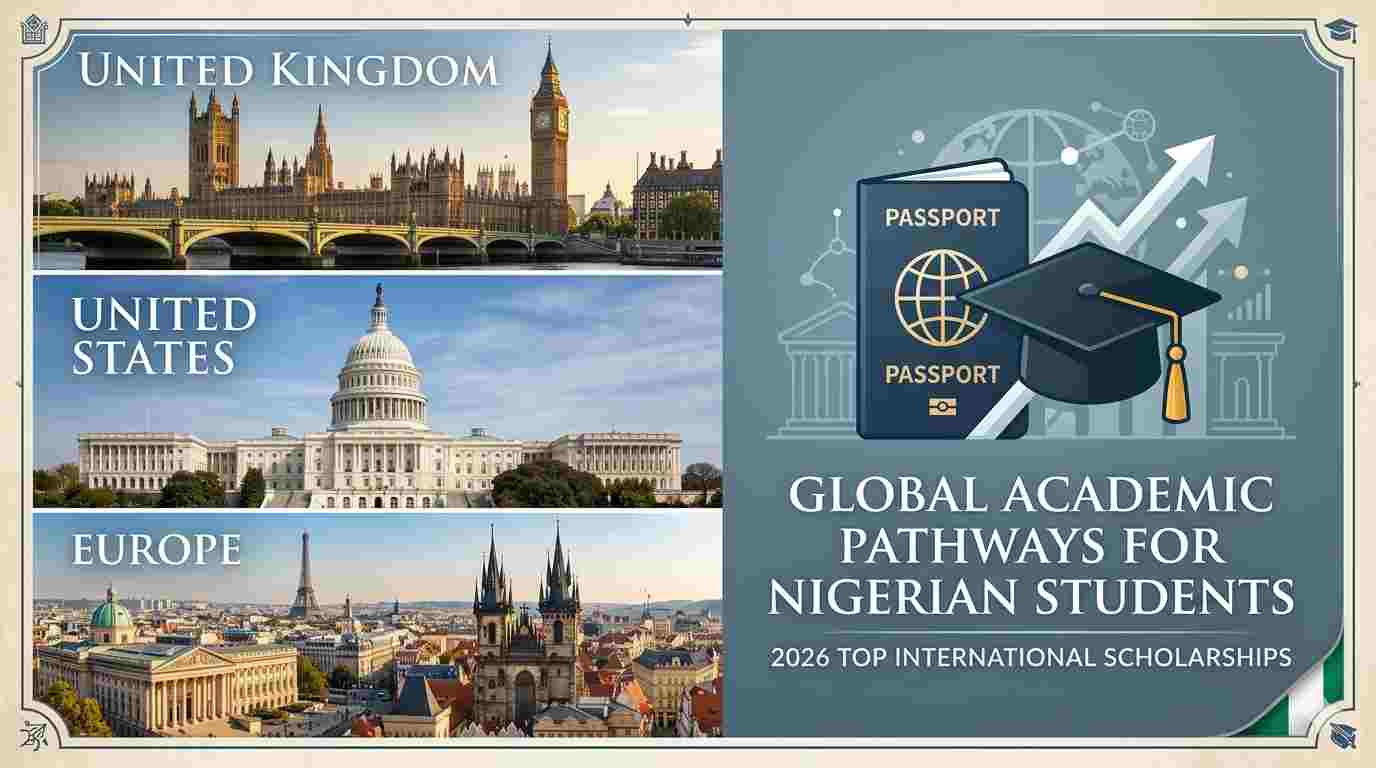
Global Academic Pathways for Nigerian Students
The dream of earning an international degree is highly popular among Nigerian students. World-class research facilities, global networking opportunities, and structured academic calendars draw thousands of applicants every year to universities in the United Kingdom, the United States, Canada, Europe, and Australia.
A serious economic obstacle stands in the way, though: the ongoing depreciation of the Nigerian Naira against major global currencies like the US Dollar, the British Pound, and the Euro. With international tuition running $20,000 to over $50,000 per academic year before living costs, the financial burden has become genuinely out of reach for most Nigerian families without assistance.
This is where fully funded scholarships become vital. These programs bridge the gap between academic ability and financial constraint, covering tuition, airfare, housing, and monthly living stipends. At Every Moment Travels, we walk students through this process regularly — the funding exists, but navigating shifting eligibility requirements, precise documentation, and genuinely intense international competition takes real preparation.
This guide breaks down ten of the strongest fully funded programs available to Nigerian scholars in 2026, along with the strategic groundwork that gives you a real shot at securing one.
The Top 10 Fully Funded Scholarships for Nigerians
1. The Chevening Scholarship (United Kingdom)
Funded by the UK Foreign, Commonwealth & Development Office, Chevening is a prestigious global award designed to develop future leaders, funding a one-year Master’s degree at any accredited UK university.
Coverage: 100% tuition fees, a monthly living stipend, return economy flights, visa fees, and an arrival/departure allowance.
Target field: Open to all fields, though alignment with UK-Nigeria bilateral development priorities (sustainable development, public health, governance, clean energy) tends to strengthen an application.
2. The Commonwealth Scholarship (United Kingdom)
The Commonwealth Scholarship Commission offers fully funded Master’s and PhD scholarships to talented individuals from low- and middle-income Commonwealth countries, including Nigeria.
Coverage: Full tuition, airfare to and from the UK, a monthly living allowance, thesis grants, and a warm clothing allowance.
Target field: Development-focused disciplines organized around six CSC themes, ranging from science and technology to strengthening global peace and governance.
3. The Fulbright Foreign Student Program (United States)
The Fulbright Program is the US government’s flagship international educational exchange initiative, enabling young Nigerian professionals and graduates to pursue Master’s or PhD programs at American institutions.
Coverage: Full tuition, health insurance, a textbook allowance, round-trip international travel, and a monthly living stipend.
Target field: Broadly cross-disciplinary, though competitive preference tends to go to STEM fields, humanities, and social sciences focused on public policy.
4. The Erasmus Mundus Joint Masters (European Union)
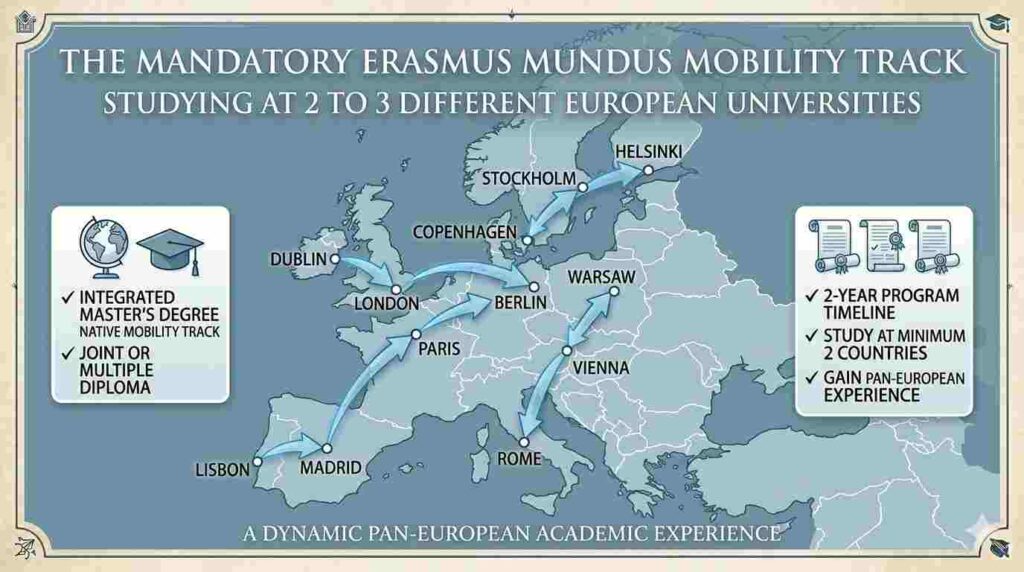
Erasmus Mundus lets students study at two to three different European universities across multiple countries, culminating in a joint or double degree.
Coverage: Full tuition, comprehensive worldwide insurance, a travel allowance, installation costs, and a fixed monthly stipend of €1,000.
Target field: Highly specialized, multidisciplinary joint Master’s programs listed in the official Erasmus Mundus catalogue.
5. The PTDF Overseas Scholarship Scheme (Nigeria/Global)
Run by Nigeria’s Petroleum Technology Development Fund, this program sponsors Nigerian graduates to study at partner universities in the UK, France, Germany, and Malaysia.
Coverage: Full university tuition, return flights, health insurance, and localized allowances for accommodation and living expenses.
Target field: Strictly oil, gas, renewable energy, and green tech-related disciplines — engineering, geosciences, environmental studies, computing.
6. The Mastercard Foundation Scholars Program (Global)
Operating through partnerships with universities worldwide, including McGill, Edinburgh, and UC Berkeley, this program targets academically gifted but economically disadvantaged African youth.
Coverage: Full tuition, textbooks and learning materials, housing, comprehensive medical insurance, travel, and a continuous living stipend.
Target field: Varies by host institution, generally focused on fields that drive broad, transformational growth across the African continent.
7. The DAAD Scholarships (Germany)
The German Academic Exchange Service (DAAD) offers a range of funding, particularly through its EPOS sub-program (Development-Related Postgraduate Courses), which supports professionals from developing nations.
Coverage: Currently around €992 per month for Master’s students and €1,300 per month for doctoral candidates (rising to €1,400 from February 2026), plus a travel allowance, health and accident insurance, and a mandatory initial German language course. These figures adjust periodically, so confirm the current amount directly with DAAD before you plan your budget around it.
Target field: Economic sciences, engineering, environmental sciences, mathematics, agriculture, and public health.
8. The Gates Cambridge Scholarship (United Kingdom)
Established through a donation from the Bill and Melinda Gates Foundation to the University of Cambridge, this highly selective award supports outstanding applicants from outside the UK pursuing a full-time postgraduate degree.
Coverage: The full cost of studying at Cambridge (University Composition Fee), a maintenance allowance (£20,000+ per year), visa costs, and inbound/outbound travel.
Target field: Any discipline available at the University of Cambridge, from theoretical physics to international relations.
9. The Rhodes Scholarship (United Kingdom / University of Oxford)
The Rhodes Scholarship is among the oldest and most prestigious international scholarships in the world, bringing outstanding young leaders from across the globe — including a dedicated constituency for West Africa/Nigeria — to study at the University of Oxford.
Coverage: All Oxford University fees, a personal stipend for living costs (over £19,000 annually), health insurance, and two economy flights.
Target field: Full-time postgraduate degrees at Oxford.
10. The Vanier Canada Graduate Scholarships (Canada)
Named after Canada’s first francophone Governor General, the Vanier CGS funds highly competitive PhD research at Canadian institutions.
Coverage: CAD $50,000 per year for three consecutive years, which comfortably covers tuition, research, and personal living expenses.
Target field: Health research, natural sciences, engineering, social sciences, and humanities.
Comparing the Top 10 Scholarships
| Scholarship | Degree Level | Primary Host Location(s) | Primary Financial Inclusions |
|---|---|---|---|
| Chevening | Master’s (1 year) | United Kingdom | Tuition, stipend, flights, visa, thesis allowance |
| Commonwealth Scholarship | Master’s & PhD | United Kingdom | Full tuition, monthly stipend, airfare, study travel |
| Fulbright Program | Master’s & PhD | United States | Tuition, monthly living allowance, flights, health cover |
| Erasmus Mundus | Joint Master’s | Multiple EU countries | Full tuition, €1,000/mo stipend, travel/installation |
| PTDF Overseas Scheme | Master’s & PhD | UK, Germany, France, Malaysia | Full tuition, flights, localized living/housing allowance |
| Mastercard Foundation | Undergrad & Postgrad | Global (US, UK, Canada, Africa) | Comprehensive tuition, accommodation, books, stipend |
| DAAD EPOS Program | Master’s & PhD | Germany | ~€992–€1,400/mo stipend, insurance, airfare, language course |
| Gates Cambridge | Master’s & PhD | University of Cambridge (UK) | Composition fees, £20,000+ maintenance stipend, airfare |
| Rhodes Scholarship | Postgraduate | University of Oxford (UK) | All university fees, £19,000+ stipend, health surcharge |
| Vanier Canada CGS | PhD | Canada | CAD $50,000 annual flat grant for three years |
Building a Winning Application, Step by Step
Securing a fully funded scholarship is a methodical process that generally starts nearly a year before your intended departure date.
Phase 1: Academic and Standardized Exam Preparation
Verify your academic standing. Aim for at least an Upper Second-Class (2:1) degree. If you graduated with a Second-Class Lower (2:2), target programs like Erasmus Mundus or DAAD, which weigh professional work experience alongside GPA.
Take English proficiency tests early. Despite Nigeria being an Anglophone country, many institutions still require formal proof of English proficiency. Sit for IELTS or TOEFL, aiming for an IELTS band score of 7.0 or higher, or a TOEFL iBT score of 100 or above.
Prepare for the GRE if you’re US-bound. For programs like Fulbright, prepare for the Graduate Records Examination, focusing on strong percentiles in both quantitative and verbal reasoning.
Once your exams are underway, it’s also worth planning your medical and safety coverage — our guide to the best student travel insurance covers what to look for before you land abroad.
Phase 2: Document Compilation and Formatting
Academic transcripts. Request your official undergraduate transcripts from your university’s registry months in advance, and keep student copies accessible for electronic uploads.
International passport. Confirm your Nigerian passport has at least 18 months of validity remaining beyond your intended study period.
Academic and professional references. Identify two academic referees (professors or senior lecturers) and one professional referee (a current or former supervisor). Give them a summary of your accomplishments to help them write strong, specific letters.
Phase 3: Perfecting Essays and Personal Statements
The Statement of Purpose. Write an analytical narrative explaining why you chose the specific course, what research or academic gaps you intend to fill, and how the university’s resources match your goals.
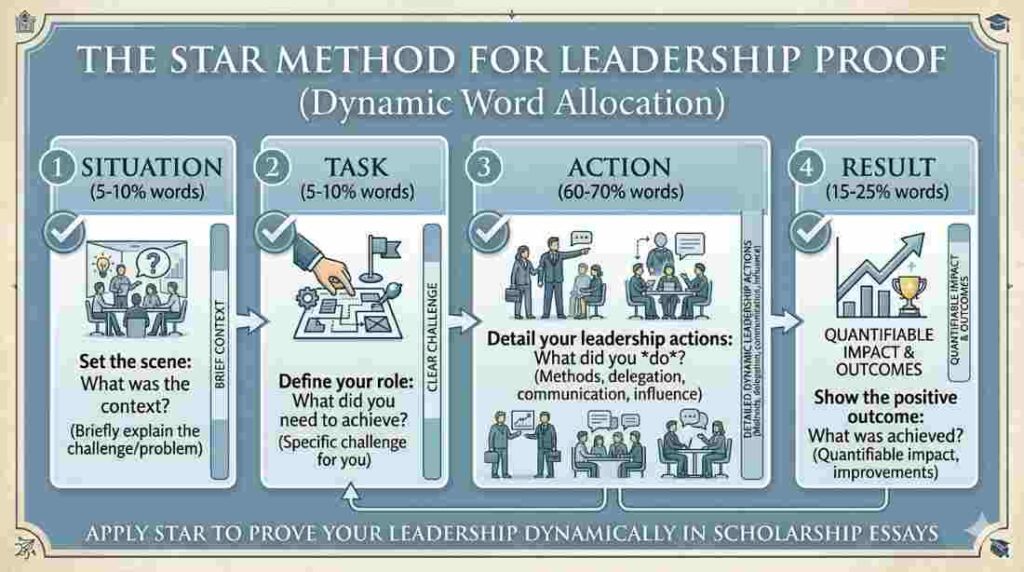
The leadership essay (Chevening-style). Don’t simply list job titles. Use the STAR method (Situation, Task, Action, Result) to explain specific instances where you led teams, influenced policy, or solved a real community problem.
The development or return essay. Show a concrete path back to Nigeria — detail how your acquired skills will apply to local industries, government agencies, or non-profits addressing real national issues.
Phase 4: Navigating the Interview Stage
Master your own dossier. Reread every word of your submitted essays — interviewers will ask about specific claims, case studies, or projects you mentioned.
Frame yourself as a solution-oriented change agent, rather than simply an applicant seeking a free degree, when answering behavioral questions.
Essential Document and Eligibility Checklist
Before starting any portal application, run through this checklist to confirm your eligibility and document readiness.
Core eligibility:
- [ ] Confirm program age limits (PTDF often caps Master’s applicants at 30 and PhDs at 40; Rhodes has strict regional age brackets).
- [ ] Confirm you meet minimum work experience requirements (Chevening, for instance, requires a minimum of 2,800 hours of documented professional or volunteer experience).
- [ ] Have your NYSC Discharge Certificate or a valid Exemption Letter ready — it’s a mandatory upload for domestic federal awards like the PTDF.
Document specifications:
- [ ] A high-resolution color scan of your original degree certificate (a statement of results may only be accepted conditionally).
- [ ] A CV formatted to international standards (Europass style for EU scholarships), emphasizing publications, research methodology skills, and leadership roles.
- [ ] A research proposal, required for all PhD and research-based Master’s applicants, with a clear title, abstract, literature review, proposed methodology, and timeline.
Expert Tips for Standout Applications
Align your narrative with global frameworks. Connect your career goals to the UN Sustainable Development Goals or the African Union Agenda 2063. If you’re studying public health, for instance, explicitly link your proposed research to SDG 3 (Good Health and Well-being) — it signals to selection committees that your work has broader, systemic value.
Use the STAR method for leadership essays. Avoid generic phrases like “I am an excellent leader with great interpersonal skills.” A concrete, metrics-driven example works far better: “In 2024, noticing a 40% drop-out rate among tech students in Lagos, I founded a peer-mentorship network. I recruited 12 senior developers, designed a 12-week curriculum, and secured $5,000 in local funding. Within one year, we retained 150 students, decreasing the attrition rate by 25%.”
Tailor every single application. Never send the same Statement of Purpose to multiple scholarship boards — review panels recognize generic, templated text easily. Customize each essay by referencing specific professors, ongoing research projects, or unique resources at that particular host institution.
If you need to arrive in your host country early for orientation before your stipend activates, our tips on finding the best hotel booking rates online can help you avoid hidden seasonal fees.
Common Mistakes to Avoid
Waiting for admission before seeking funding. Major awards like Chevening, Commonwealth, and Fulbright open funding applications up to a full year in advance, running entirely parallel to university admissions — don’t wait for an unconditional offer letter first.
Copying content or using AI to ghostwrite your essays. This leads to immediate disqualification. Top-tier scholarship bodies use anti-plagiarism tools and AI detectors — your voice needs to be genuinely yours.
Submitting generic or weak references. A referee who writes “He was a student in my class and got an A” doesn’t help your application. Work with mentors who can speak to your research skills, intellectual curiosity, and leadership potential specifically.
Ignoring formatting rules and document limits. If a prompt requests a 500-word essay, don’t submit 750. If a document needs to be under 2MB as a PDF, don’t upload a 5MB JPEG. Disregarding basic instructions often leads to automatic rejection before a human ever reviews the file.
Frequently Asked Questions
Can I apply with a Second Class Lower (2:2) degree? Yes, but choose your programs strategically. Gates Cambridge and Rhodes rarely accept applications below a First Class or strong 2:1, but Chevening, Erasmus Mundus, and DAAD place real weight on professional work experience, volunteer work, and your personal statement — a strong career track record can offset a lower undergraduate classification.
Is IELTS mandatory for all Nigerian applicants? Not always, but having an IELTS or TOEFL score makes your application far more versatile. Some universities in the UK and US waive English proficiency exams for Nigerian applicants, but many scholarship review panels still require one to standardize applicants globally.
Can I apply for multiple scholarships at the same time? Yes, and diversifying is generally a good idea. You can apply for Chevening, Commonwealth, and Erasmus Mundus simultaneously, provided you customize your essays for each program’s distinct goals.
Do I have to return to Nigeria after completing my studies? For government-backed fellowships like Chevening, Fulbright, and Commonwealth, returning home upon graduation is a mandatory legal requirement of the visa framework. These awards are designed to invest in international development, and scholars are generally expected to apply their new skills at home for a minimum of two years.
Conclusion
Securing a top international scholarship as a Nigerian student takes dedication, strategic planning, and real persistence. The current economic climate presents genuine challenges, but these programs offer an accessible pathway to world-class education for students ready to put in the work.
Treat scholarship applications like a real project: map out your deadlines, refine your personal narrative, gather your documentation early, and approach every essay with clarity and purpose. The effort you put in now can genuinely reshape your academic and professional path.
Resources for Further Information
- Chevening Scholarships — official guidance for applicants from Nigeria
- Commonwealth Scholarship Commission — Master’s and PhD handbook for Commonwealth countries
- Fulbright Foreign Student Program — US Bureau of Educational and Cultural Affairs
- Erasmus Mundus Joint Masters Catalogue — European Commission
- Petroleum Technology Development Fund (PTDF) — Overseas Scholarship Scheme guidelines