

































Travel has changed a lot over the last decade. What used to be a simple decision (book a hotel and go) has turned into a genuine choice between traditional hotels and Airbnb-style rentals. At Every Moment Travels, we hear the same questions constantly: is Airbnb actually cheaper than a hotel? Which is safer? What works better for a family trip, or a long stay?
This guide breaks the decision down in a practical way, so you can choose confidently for your next trip rather than guessing.
The Real Dilemma
Hotels offer predictability, service, and convenience. Airbnb offers space, flexibility, and a more local experience. The trouble is that prices fluctuate unpredictably on both sides, hidden fees can surprise you, safety and quality vary widely by property, and reviews don’t always tell the full story. Choose the wrong option, and you can end up overpaying for a cramped room, dealing with a poorly managed rental, or losing money on a non-refundable booking you didn’t fully understand.
If you’re planning a full trip around this decision, our guide to finding cheap flights is worth pairing with this one, since flights and accommodation together drive most of your total travel cost.
How to Choose Between Hotel and Airbnb, Step by Step
Step 1: Define Your Travel Purpose
Start by asking whether you’re traveling for vacation, business, or study, whether your stay is short (one to three days) or long (a week or more), and whether you’re traveling solo, as a couple, or with family. As a rough rule of thumb, short stays tend to favor hotels, and long stays tend to favor Airbnb.
Step 2: Set a Realistic Budget
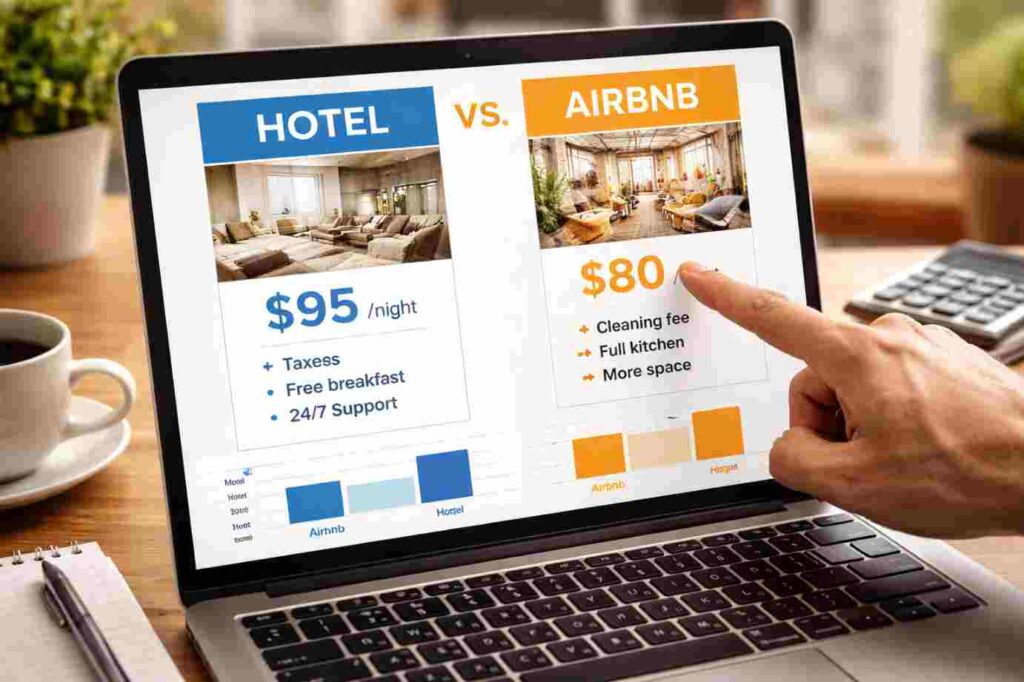
Don’t compare base prices alone. Factor in Airbnb cleaning fees, taxes, service charges, extra guest fees, and parking or Wi-Fi costs on both sides. Many travelers assume Airbnb is cheaper going in, only to find that’s not true once they reach checkout.
Step 3: Evaluate Location Carefully
Hotels tend to sit in central areas with easy transport access. Airbnb rentals often sit in residential neighborhoods, which can mean extra transport cost and time. A cheaper Airbnb far from the city center can end up costing more overall once you factor that in.
Step 4: Compare What You Actually Need
Ask yourself whether you need a kitchen, want daily housekeeping, or need 24/7 support if something goes wrong. Hotels generally offer housekeeping, room service, and on-site security. Airbnb generally offers a kitchen, more space, and more privacy. Which one matters more depends entirely on your trip.
Step 5: Check Flexibility and Cancellation Policies
Hotels are usually flexible, with straightforward refunds. Airbnb cancellation policies vary significantly by host, and can be genuinely strict. Always read the specific cancellation terms before you book either one.
Step 6: Read Reviews Strategically
Don’t just check the overall rating. Look specifically at recent reviews, cleanliness complaints, how responsive the host or hotel is, and any recurring mentions of noise or location issues. Before finalizing a hotel choice, our guide to the best hotel booking websites can help you compare prices across platforms so you’re not overpaying.
Booking Checklist
Before booking either option, confirm your budget, your exact travel dates, your final guest count, and your general location on a map.
For a hotel specifically, check whether breakfast is included, whether the cancellation policy is flexible, whether taxes are already included in the quoted price, and how far the property sits from the attractions you actually plan to visit.
For an Airbnb specifically, check the total price including the cleaning fee, the house rules, the host’s rating (aim for 4.5 or above), how clear the check-in process is, and what safety features the listing mentions (locks, cameras, and general neighborhood safety).
Hotel vs. Airbnb: Detailed Comparison
| Feature | Hotels | Airbnb |
|---|---|---|
| Price (short stay) | Often cheaper | Can run more expensive once fees are added |
| Price (long stay) | Expensive | Generally more affordable |
| Privacy | Limited | High |
| Space | Small rooms | Full apartments or homes |
| Amenities | Standardized | Varies significantly by host |
| Cleaning | Daily | Usually one-time |
| Safety | Consistently high | Depends heavily on host and location |
| Flexibility | Good | Varies by host |
| Customer support | 24/7 | Limited |
| Local experience | Low | High |
When a Hotel Is the Better Choice
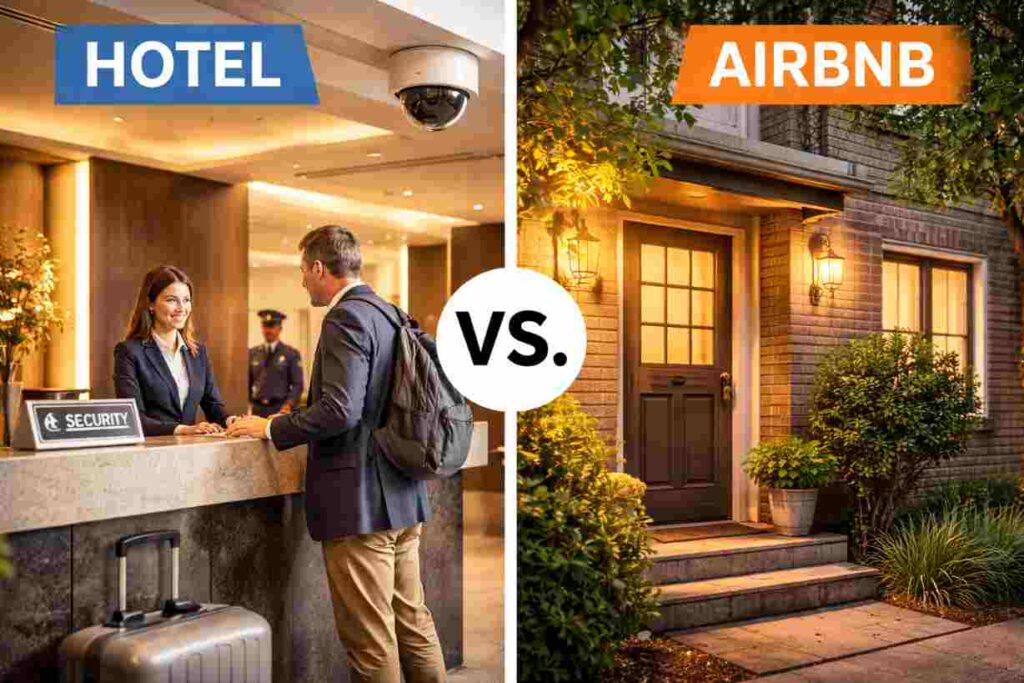
Hotels make the most sense for short stays of one to three nights, where you don’t want to deal with check-in complications or cleaning fees. They also win on convenience, reception, room service, and an easy check-in process. They also win on safety, with dedicated security staff, surveillance, and emergency assistance built in. For business trips specifically, a hotel’s professional environment and reliability tend to matter more than an Airbnb’s flexibility.
When an Airbnb Is the Better Choice
Airbnb tends to win for longer stays, where weekly or monthly discounts meaningfully reduce the total cost, and for family or group trips, where more bedrooms translate directly into better value. If you want a genuinely home-like experience (a kitchen, a living room, laundry) or you simply prefer privacy without staff interruptions, Airbnb is generally the better fit.
A Realistic Cost Comparison
Here’s how a five-night stay might break down in practice.
Hotel: a room rate of $80/night comes to $400, plus roughly $50 in taxes, for a total of $450.
Airbnb: a nightly rate of $60 comes to $300, plus an $80 cleaning fee and a $40 service fee, for a total of $420.
Airbnb looks cheaper here, but only slightly — and if the rental sits far from where you actually need to be, added transport costs can easily close that gap or flip it entirely in the hotel’s favor.
Expert Tips for Choosing Between the Two
Always compare the total price, never just the initial listing price. Check both platforms before deciding. Searching hotel sites and Airbnb side by side takes a few extra minutes and can meaningfully change your decision.
Book early where you can, since prices on both sides tend to climb as your travel date approaches. Be wary of unusually cheap listings, if a price looks too good to be true relative to similar options nearby, it often is. On Airbnb specifically, favor Superhosts, who tend to be more consistent and reliable.
Look for free cancellation wherever it’s offered, since flexibility is worth real money if your plans shift. And think about your actual daily schedule, if you’ll be out exploring most of the day, a hotel room is plenty; if you’ll be spending real time in, an Airbnb’s extra space pays off more.
If you’re staying at a hotel and want to save on food without sacrificing convenience, most grocery delivery apps (Instacart, Uber Eats, and similar) can deliver directly to your room in many hotels. It is worth checking with the front desk on arrival, since it can meaningfully cut your food costs compared to eating out every meal.
A well-structured plan also helps you choose better in the first place. Our guide to writing a travel itinerary is worth building out before you book either option.
Common Mistakes Travelers Make
Ignoring hidden fees — Airbnb cleaning fees alone can meaningfully inflate what looked like a cheap nightly rate. Choosing based on price alone — a cheap location can mean an expensive transport bill once you add it up. Not reading reviews carefully — a 4.2 rating isn’t automatically a safe bet; the details in recent reviews matter more than the headline number. Booking without checking the cancellation policy — Airbnb terms can be genuinely strict, and it’s worth knowing that before you commit. Overestimating space needs — a solo traveler rarely needs a full apartment. Not checking the safety of the area, which matters especially for Airbnb given the wider range of neighborhoods it covers. And booking at the last minute, which tends to mean higher prices and far fewer options on both sides.
Hotel vs. Airbnb by Traveler Type
Solo travelers tend to do best with hotels — generally safer, easier, and with more built-in support if something goes wrong. Couples genuinely depend on the trip: a romantic getaway often suits an Airbnb better, while a short city stopover leans toward a hotel. Families tend to come out ahead with Airbnb, thanks to more rooms, kitchen access, and better overall value for the group. Digital nomads usually prefer Airbnb too, for the workspace and home-like environment that suits longer stays. Business travelers generally do better with hotels, where reliable Wi-Fi and a professional environment matter more than extra space.
Safety, Flexibility, and Comfort — Side by Side
On safety, hotels generally come out ahead, with dedicated security staff, standardized procedures, and built-in emergency assistance, while Airbnb safety depends heavily on the specific host, property, and neighborhood. On flexibility, hotels also tend to win, with easier cancellations and more flexible check-in than the host-dependent policies common on Airbnb. On comfort and experience, though, Airbnb often wins — a more unique, home-like stay, even if it’s sometimes less consistent than a hotel’s predictable, professional service.
Whichever you choose, understanding why travel insurance matters is worth doing beforehand — it protects you from unexpected cancellations or emergencies either way.
Frequently Asked Questions
Is Airbnb cheaper than hotels? Not always. Short stays often favor hotels once Airbnb’s added fees are factored in.
Which is safer, a hotel or an Airbnb? Hotels are generally safer, thanks to standardized security systems that most Airbnb rentals don’t have.
Which is better for long stays? Airbnb, in most cases — weekly and monthly discounts make a real difference over an extended stay.
Can an Airbnb host cancel my booking? Yes, though it’s uncommon with experienced, highly rated hosts.
Do hotels have hidden fees? Yes — taxes, service charges, and parking are common examples worth checking for before you book.
Is Airbnb good for families? Generally yes, thanks to the extra space and often better overall value for a group.
Can I negotiate Airbnb prices? Sometimes, particularly for longer stays — it’s worth asking the host directly.
The Final Verdict
There’s no single right answer here. Choose a hotel if you want convenience, safety, a short and simple stay, and reliable service. Choose an Airbnb if you want space, privacy, a longer stay, and more of a local experience.
Ultimately, the best travelers don’t pick one option blindly for every trip — they match the accommodation to what that specific leg of the journey actually needs.
Conclusion
The choice between a hotel and an Airbnb was never really about which one is objectively “better” — it’s about what fits your specific trip. The smartest approach is to compare total costs rather than headline prices, evaluate location honestly, match your accommodation to your actual travel purpose, and read reviews critically rather than skimming the star rating. Apply that consistently, and you’ll avoid the costly mistakes that trip up a lot of travelers on this exact decision.