































Why the Visa Interview Matters More Than You Think
For many travelers, students, and professionals, the visa interview is the most stressful part of the entire application process. You’ve prepared documents, paid fees, booked appointments, and submitted forms — but the final decision often comes down to how well you answer a handful of short questions in person.
At Every Moment Travels, we see this outcome constantly: applicants who fail the interview aren’t usually unqualified. They answer poorly, nervously, or inconsistently, and that’s what costs them the visa.
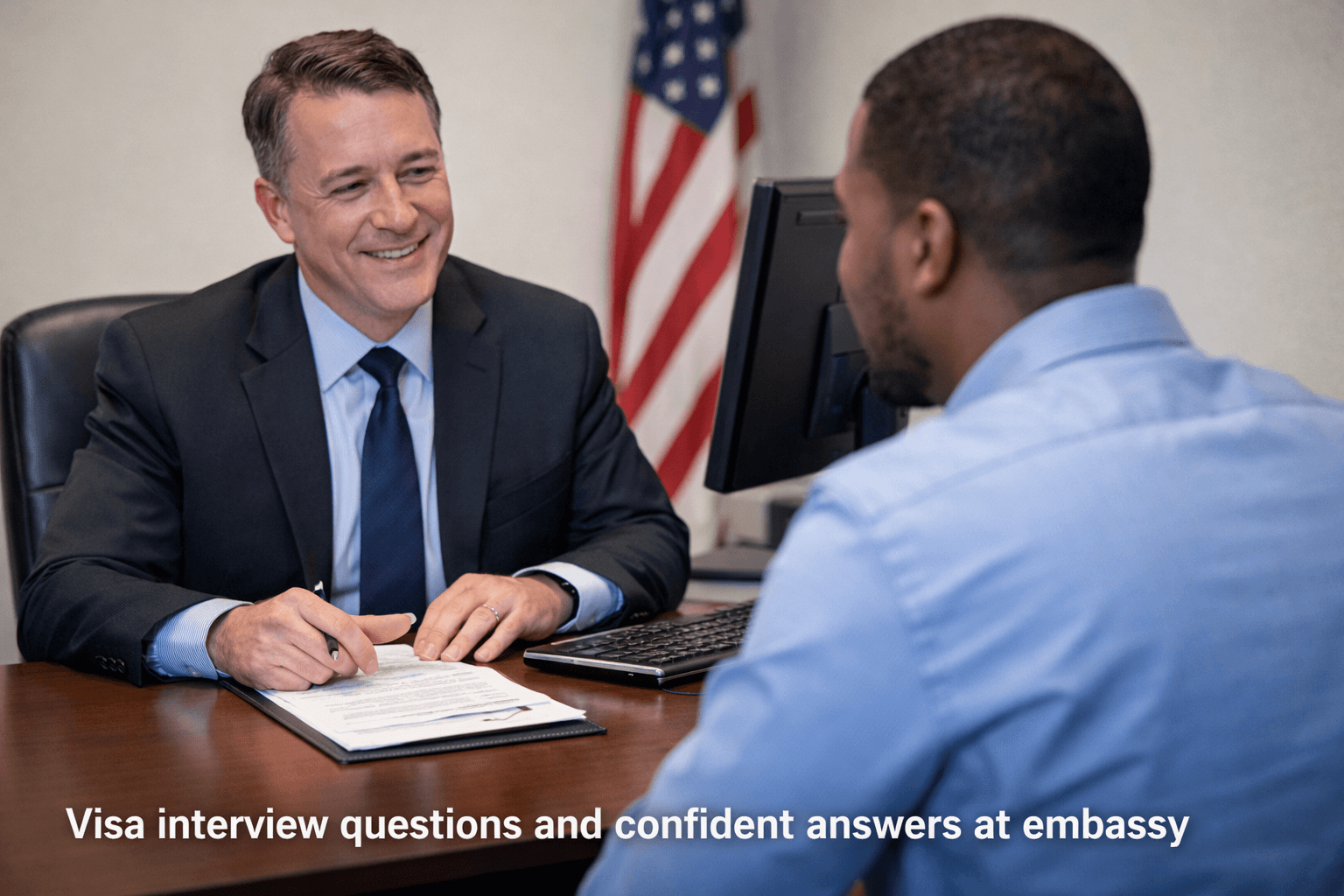
A visa interview isn’t designed to trick you. It exists so a consular officer can verify your intentions, credibility, financial stability, and ties to your home country. This guide covers the most common questions, what officers are actually assessing behind each one, and how to answer confidently whether you’re applying for a Schengen visa, a US visa, a UK visa, a Canada visa, or a student visa.
What a Visa Interview Is Actually Checking For
Before memorizing any answers, it helps to understand why the interview exists at all. Officers use it to confirm five things: that you have a genuine reason for travel, that you’ll return to your home country, that you have sufficient financial support, that your documents are authentic, and that you don’t present a security or immigration risk. Every question you’ll face falls into one of these five categories.
There’s no such thing as a “perfect” scripted answer — only honest, consistent, and confident ones.
Before You Walk In: General Interview Tips
Dress neatly and conservatively. A full suit isn’t necessary, but skip casual wear like slippers or ripped jeans.
Keep your answers clear and concise. Interviews run short, and most officers prefer direct answers over long explanations unless they specifically ask for more detail.
Maintain eye contact and calm body language — confidence comes through in your posture and tone as much as your words.
Tell the truth, always. A single lie can lead to a permanent refusal or a future ban.
The Most Common Questions, and How to Answer Them
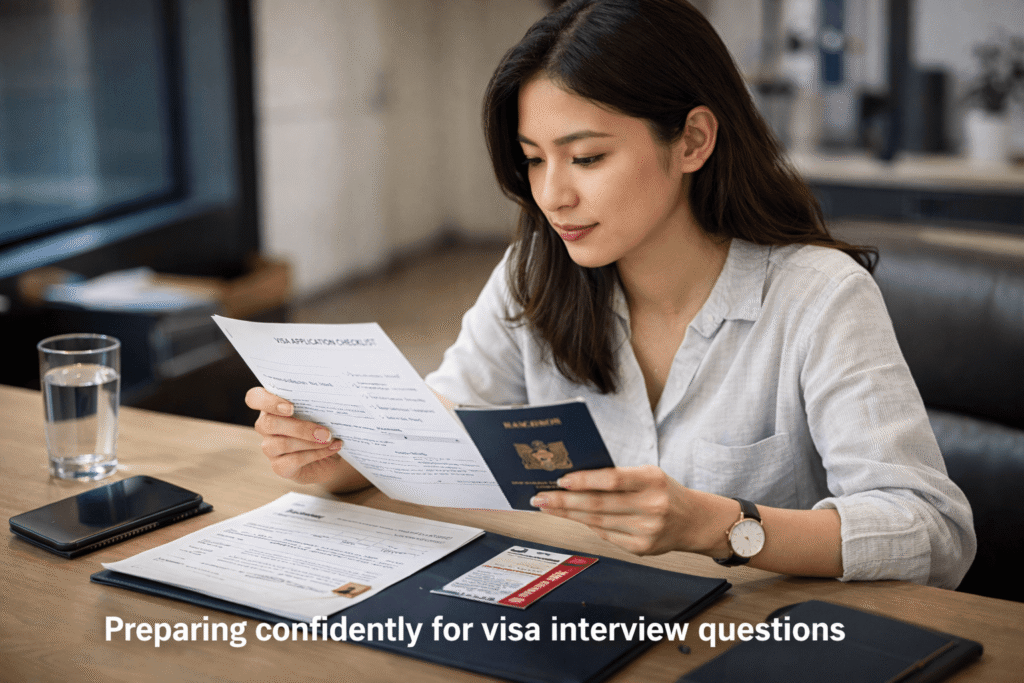
“Why do you want to travel to [Country]?”
The officer wants to know your purpose of travel and whether it matches your visa type. For a tourist visa, something like “I want to visit France to experience its culture, historical landmarks, and museums. I plan to spend 10 days visiting Paris and Lyon” works well. For a student visa: “I’ve been admitted to the University of Toronto for a Master’s program in Data Science, which aligns with my academic background and career goals.” For a business visa: “I’ll be attending a business conference and meeting partners related to my company’s expansion.”
Avoid vague answers like “I just want to travel” or “I’ll see what happens when I get there” — they signal a lack of real planning.
“How long do you plan to stay?”
The officer wants to confirm your stay matches the visa rules. A specific answer — “I plan to stay for 14 days, from June 3rd to June 17th, and return to Nigeria afterward” — reads far better than “I don’t know yet.”
“Where will you stay during your visit?”
This checks your accommodation planning and stability. “I’ve booked a hotel in Rome for the first five nights and another in Florence for the remaining days” works well, as does “I’ll be staying with my sister at her apartment — I’ve included her invitation letter.”
“Who is sponsoring your trip?”
The officer wants to understand your financial backing. “I’m self-sponsored and employed as a software developer,” or “My parents are sponsoring me, and their bank statements are included” both work — as long as your answer matches your actual documents.
“How much money do you have for this trip?”
This checks whether you can support yourself legally. Give a real, specific figure that covers accommodation, transportation, meals, and a reasonable emergency buffer. Never exaggerate or guess.
“What do you do for a living?”
The officer is checking your employment stability and ties to home. “I work as a marketing executive at XYZ Company, where I’ve been employed for three years” is far stronger than a vague job description.
“Have you traveled outside your country before?”
This checks your travel history and compliance record. Answer honestly either way — “Yes, I’ve traveled to Ghana and the UAE and returned within the allowed stay” or “No, this will be my first international trip” are both acceptable, as long as they’re true.
“Do you have relatives or friends in this country?”
This checks your overstay risk. Having relatives abroad isn’t a problem on its own — lying about it is.
“What ties do you have to your home country?”
This is one of the most important questions you’ll face. Strong ties include employment, business ownership, family responsibilities, property ownership, and ongoing education commitments. A solid answer sounds like: “I’m employed full-time, have immediate family in Nigeria, and I’m continuing my career here after the trip.”
“What will you do after your visa expires?”
Keep it simple and direct: “I’ll return to Nigeria to continue my job, business, or studies.”
Student, Tourist, and Business Visa Variations
For student visas, expect “Why did you choose this university?” — answer by covering course relevance, the school’s reputation, and how it aligns with your career goals. If asked “Why not study in your home country?”, avoid criticizing your home country’s education system; focus instead on what’s genuinely unique about your chosen program.
For tourist visas, expect “Why did you choose this country and not another?” — mention the culture, attractions, or personal interest that drew you specifically.
For business visas, expect “Who are you meeting?” — have your invitation letters ready and be specific about the meeting’s purpose.
Building Real Confidence
Practice your answers out loud rather than just reading them — confidence comes from familiarity, not memorization. Keep your answers short and direct rather than over-explaining. If you don’t understand a question, it’s fine to politely ask the officer to repeat it. And remember that confidence isn’t the same as aggression — stay polite, respectful, and calm throughout.
Mistakes That Commonly Cause Rejection
Inconsistent answers, nervous rambling, fake documents, overconfidence, and contradicting your written application all rank among the most common reasons interviews go badly. Our guide to common visa mistakes covers more of these in depth.
What to Expect by Destination
Schengen visa interviews focus heavily on your travel itinerary, proof you’ll return home, and your travel insurance. Our step-by-step Schengen visa application guide covers the full process.
US visa interviews tend to run short and direct, with a strong emphasis on proving your ties to home.
UK visa interviews focus on financial clarity and making sure your stated study or work intentions stay consistent with your documents.
Frequently Asked Questions
Is it okay to be nervous during a visa interview? Yes. Officers expect some nervousness — honesty matters far more than a flawless delivery.
Can I fail a visa interview even with perfect documents? Yes. Poor or inconsistent answers can still lead to rejection, even with a strong paper file.
How long does a visa interview usually last? Most run between 3 and 10 minutes.
Final Thoughts
A visa interview isn’t an exam — it’s a conversation. When you prepare honestly, understand your own purpose clearly, and answer with genuine confidence, your approval odds rise significantly.
Be honest, be prepared, and be confident. If you’d like direct help preparing for your visa interview, reach out to us at everymomenttravels@gmail.com.