
































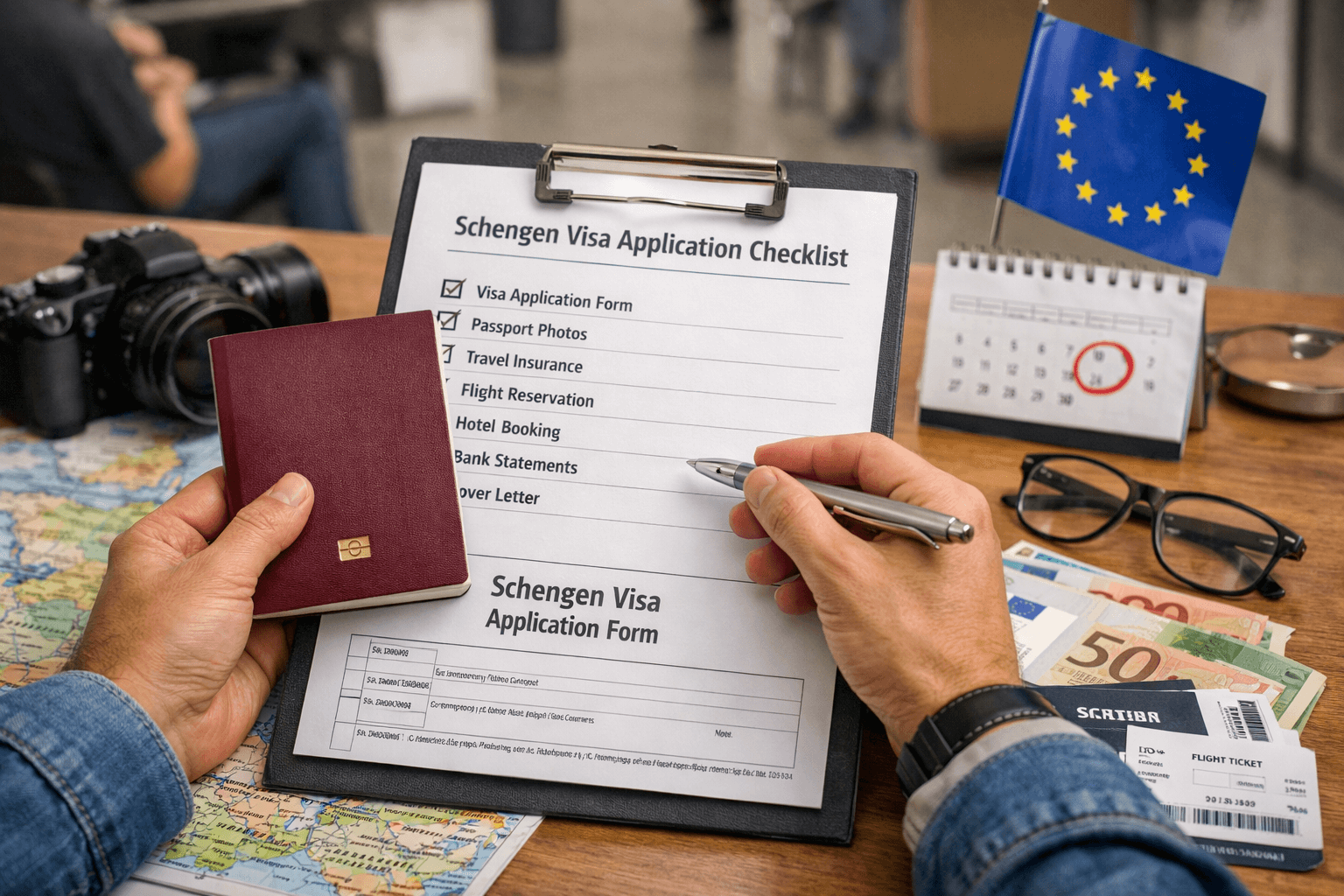
Why the Schengen Visa Matters
Applying for a Schengen visa can feel intimidating — forms, appointments, biometrics, and embassy rules that seem to shift without warning. Once you understand the actual process, though, it becomes a structured routine rather than a guessing game.
A Schengen visa lets you travel freely across the Schengen Area with a single visa. Whether you’re visiting Paris, attending a business meeting in Berlin, or touring Italy, this visa is your gateway to the continent.
This guide breaks the entire process into clear, manageable steps, written in plain language, with practical tips to help you avoid mistakes and raise your approval odds.
What Is a Schengen Visa?
A Schengen visa is a short-stay visa that lets non-EU citizens enter and move freely within the Schengen Area for up to 90 days within any 180-day period.
Schengen Countries (2026)
The Schengen Area now covers 29 countries. Bulgaria and Romania completed full membership on January 1, 2025, after joining for air and sea travel in March 2024, so they belong on this list now too:
Austria, Belgium, Bulgaria, Croatia, Czech Republic, Denmark, Estonia, Finland, France, Germany, Greece, Hungary, Iceland, Italy, Latvia, Liechtenstein, Lithuania, Luxembourg, Malta, Netherlands, Norway, Poland, Portugal, Romania, Slovakia, Slovenia, Spain, Sweden, Switzerland.
Two EU members still sit outside the Schengen Area: Cyprus and Ireland. A Schengen visa doesn’t cover either one.
Types of Schengen Visas
Identify the correct visa type before you start your application:
- Tourist Visa — sightseeing, visiting friends or family
- Business Visa — meetings, conferences, trade fairs
- Visitor Visa — visiting relatives or friends
- Medical Visa — medical treatment
- Cultural/Sports Visa — events or competitions
- Airport Transit Visa — transiting through Schengen airports
Choosing the wrong category ranks among the most common reasons for rejection.
Step 1: Determine Where to Apply

Apply at the embassy, consulate, or visa center of the country where you’ll spend the most days, or, if your stay splits evenly, your country of first entry.
For example: France (4 days) + Italy (6 days) means you apply to Italy. Spain (5 days) + Portugal (5 days) means you apply to Spain, since that’s your first entry point.
Step 2: Time Your Application Correctly
Timing matters more than most applicants expect. You can apply as early as six months before travel and as late as 15 days before, but four to eight weeks before departure works best for most people.
Applying too late raises both your stress and your rejection risk, especially during peak travel season (May through September).
Step 3: Book Your Appointment
Most embassies outsource visa processing to centers like VFS Global, TLScontact, or BLS International.
To book: visit the official embassy or visa center website, create an account, choose your visa category, select an appointment date, and pay the service fee where required. Appointment slots fill quickly, so book as early as your timeline allows.
Step 4: Complete the Application Form
Download the Schengen visa application form from the embassy or visa center website. Use capital letters, make sure every detail matches your passport exactly, avoid leaving fields blank (use “N/A” where genuinely not applicable), and stay honest and consistent throughout. Small mistakes here cause real delays or outright rejection.
Step 5: Gather Your Documents
This step carries the most weight in the entire process.
Standard documents: a valid passport (issued within the last 10 years, with at least 2 blank pages), your completed application form, two recent passport photographs, a travel itinerary or flight reservation, hotel booking or accommodation proof, travel medical insurance with a minimum €30,000 coverage, proof of financial means (bank statements, payslips), a cover letter explaining your trip, and proof of ties to your home country (an employment letter, business registration, or similar).
Additional documents, depending on visa type: an invitation letter for business or visitor visas, employer leave approval, a student letter from your school, or a sponsorship letter where applicable.
Step 6: Write a Strong Cover Letter
Your cover letter ties your documents together into one clear story. It should cover your purpose of travel, your dates and destinations, your accommodation details, your financial means, and a clear intention to return home. A well-written cover letter can meaningfully improve your approval odds.
For a deeper walkthrough, our guide to writing a compelling visa cover letter covers this step in detail.
Step 7: Attend Your Appointment
Arrive at least 15 minutes early on appointment day. Expect document submission, biometric data collection (fingerprints and a photo), and a short interview if your case requires one.
Common interview questions include why you’re traveling, how long you’ll stay, who’s sponsoring your trip, and what you do for a living. Stay calm, honest, and consistent across every answer.
Our guide to visa interview questions and answers helps you prepare further.
Step 8: Pay the Visa Fee
As of 2026, adults pay €80, children aged 6–12 pay €40, and children under 6 pay nothing. Visa center service fees are separate and non-refundable, even if your application gets rejected.
Step 9: Track Your Application
You’ll receive a tracking number after submission. Processing generally takes 15–30 calendar days, though some cases run up to 45 days. Avoid booking non-refundable flights until your visa is actually approved.
Step 10: Collect Your Passport
You’ll be notified by email or SMS once a decision is made, and can collect your passport in person or by courier.
If approved, check your visa validity dates, number of entries, and that your name and passport number appear correctly.
If rejected, you’ll receive a refusal letter stating the reason along with your appeal options.
Common Reasons for Rejection
Insufficient funds, a weak stated travel purpose, poor travel history, inconsistent information, and lack of proof you’ll return home all rank among the most common causes. Our guide to common visa mistakes covers these in more depth.
Tips to Improve Your Approval Chances
Apply at the right embassy, submit complete and genuine documents, show strong ties to home, keep a clean travel history, and never fake a hotel or flight booking — embassies verify these more often than applicants expect.
Frequently Asked Questions
Is a Schengen visa valid for all European countries? It’s valid across all 29 Schengen Area countries, but not for every European country — Cyprus and Ireland sit outside the Schengen Area despite being EU members.
Can I extend a Schengen visa? Only in exceptional cases, such as a medical emergency or force majeure.
Is travel insurance mandatory? Yes. Every Schengen visa application requires it.
Final Thoughts
The Schengen visa application process isn’t difficult — it’s detailed. With proper preparation, accurate documentation, and a clear travel purpose, thousands of applicants get approved every day.
Treat your application like a professional file rather than a rushed task. Done right, your Schengen visa opens the door to unforgettable European travel.








I love what you guys are up too. This kind of clever work and
exposure! Keep up the wonderful works guys I’ve added you guys
to my blogroll.
Thank you for this review. It means a lot to us.